FeaturedGift Set
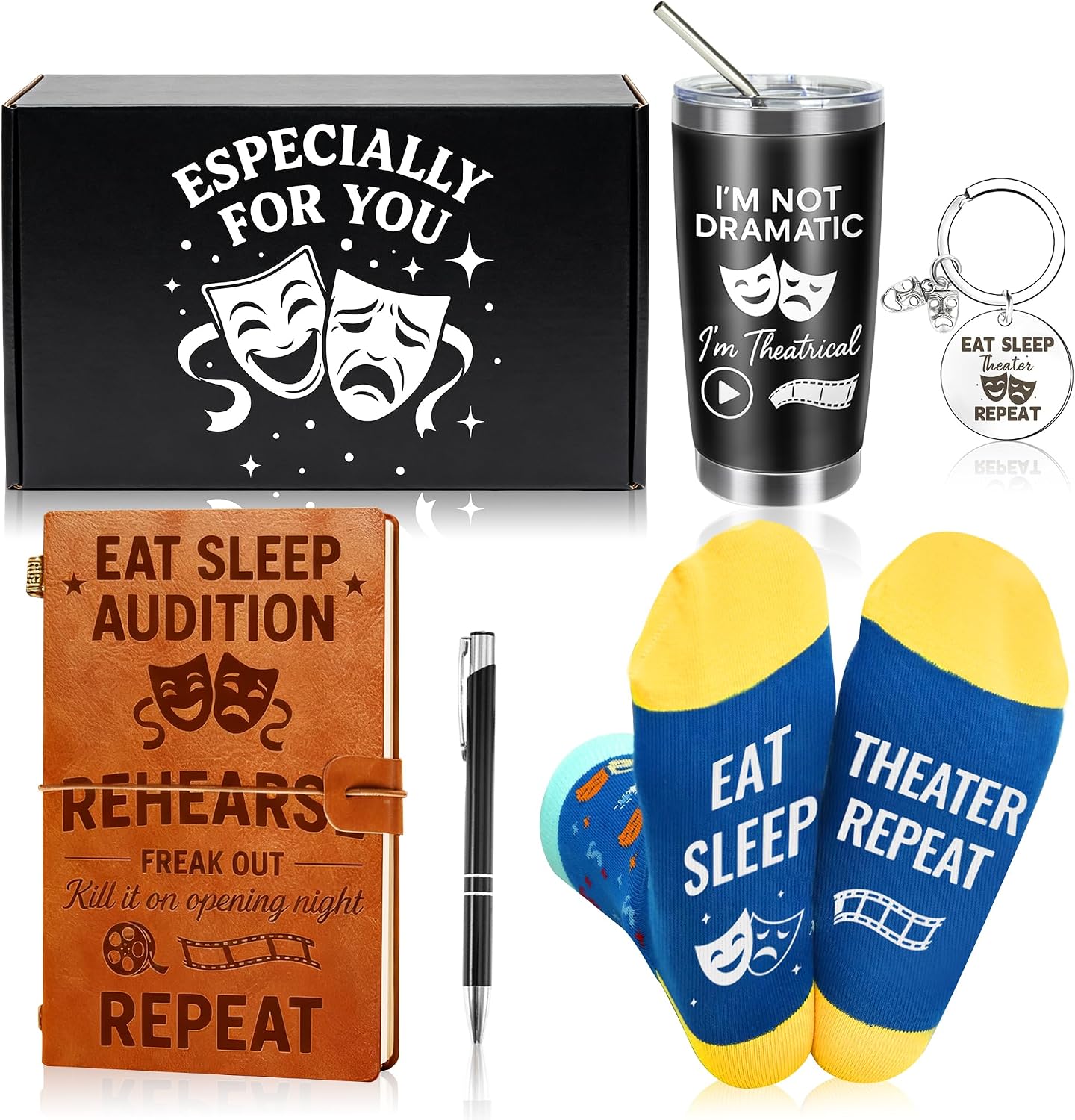
Musical Theatre Fan Gift Box
A bundled gift box combining several small musical theatre-themed items.
Verified — real listing, active link
Amazon
Check Price
Musical Theatre Guides
People usually reach for "sung-through" to answer a narrower question than the term actually deserves: is there talking in this show, or not? That's a fair starting point, but it undersells what the label is actually pointing at. A sung-through musical isn't just a musical that happens to have fewer spoken lines. It's a structural choice, one where music and lyrics are doing work that spoken dialogue would normally have to do: carrying exposition, building arguments between characters, marking the passage of time, signaling who has power in a scene and who doesn't. Once you notice that shift, shows like Hamilton and Les Misérables start to look less like musicals that skipped the talking and more like musicals built on a different foundation entirely.
Most musicals are "book musicals," meaning they're built around a script, the book, with songs dropped in at specific emotional or dramatic peaks. Dialogue moves the plot from one number to the next; the songs themselves are often more like extended emotional pauses than plot engines. You can usually tell, in a book musical, where the "scene" ends and the "song" begins.
A sung-through musical collapses that separation. According to TDF's Theatre Dictionary, a sung-through show is one in which all (or nearly all) of the text is rendered in song, rather than spoken as dialogue between musical numbers. That's a structural definition, not a stylistic one: it's not about how much a show sounds like it's "singing all the time," it's about whether the music is the vehicle actually carrying the story forward, scene to scene, rather than pausing for it.
The honest answer is that it depends on what a writer wants the music itself to be able to do. In a book musical, dialogue can move quickly through plot mechanics, then hand off to a song once the emotional stakes are high enough to justify breaking into melody. That's an efficient division of labor, but it also means the songs are somewhat separable from the plot: you could, in theory, summarize a book musical's story without quoting a single lyric.
Sung-through writing removes that option. If a scene's information, argument, or turning point only exists inside a song, the song can't be treated as a break from the story: it is the story at that moment. That's a real trade-off: sung-through shows tend to move faster and hit harder emotionally scene-to-scene, because there's no spoken connective tissue slowing things down between musical peaks. What they give up is some of the specific, unglamorous texture of ordinary speech: the halting, imperfect way people actually talk when they're not making a dramatic point.
Character development shifts with it, too. In a book musical, a character can reveal something about themselves through an offhand line of dialogue long before they ever get a song of their own. In a sung-through show, that same revelation has to arrive already shaped by melody, rhythm, and rhyme, which tends to compress character development into fewer, more concentrated moments rather than spreading it across a longer stretch of ordinary talk.
This is where the form's mechanics actually live. In a sung-through show, a musical motif can do what a callback line of dialogue would do in a play: a melody returning later in the score can remind an audience of an earlier argument, relationship, or promise without a character having to say so out loud. Reprises aren't just nostalgic bonus tracks; they're structurally load-bearing, carrying meaning forward the way a repeated line of dialogue would in a straight play.
Transitions work differently too. Where a book musical can use a blackout or a scene change to jump time and place, sung-through scores often have to compose their way through those transitions, meaning the orchestration itself has to carry the audience from one moment to the next, because there's no spoken line to say "three weeks later." That puts real pressure on staging and choreography as well: if dialogue can't clarify who's speaking to whom or what's physically happening, the movement on stage has to do some of that clarifying work instead.
Hamilton is one of the most commonly cited modern examples of the form, and it's a useful case precisely because it shows how far "sung-through" can stretch without becoming absolute. The show is sung and rapped almost continuously: its density is part of the point, since so much of its exposition (who these characters are, what they want, how they're related) is delivered through rapid, rhymed verse rather than expository dialogue scenes. The relationships between Hamilton's large cast are established almost entirely through what characters sing about each other and to each other, rather than through scenes that pause the music to explain who's who.
But it's not literally wall-to-wall singing with zero exceptions, and it's worth being precise about that rather than repeating the stronger claim uncritically. The clearest documented departure comes in "One Last Time," where Washington's real 1796 Farewell Address is delivered as spoken text (Hamilton reads it aloud while Washington sings underneath the same words), a deliberate hybrid moment rather than a lapse in the show's own rule. That single, carefully placed exception is worth noticing precisely because of how rare it is: it tells you the show usually treats spoken word as something significant enough to reserve for one specific, historically loaded moment, rather than a tool it reaches for casually.
Les Misérables makes a useful contrast, because it arrives at a very similar structural commitment, continuous music carrying the story, from a completely different sound and tradition. Where Hamilton draws on hip-hop's density and internal rhyme, Les Misérables, composed by Claude-Michel Schönberg with a French libretto by Alain Boublil (later given English lyrics by Boublil and Herbert Kretzmer), draws on operatic orchestration and recurring leitmotifs: musical themes tied to specific characters or ideas that return and transform across the score, in a more classical sense than Hamilton's callbacks.
Like Hamilton, it isn't completely without spoken text ("Master of the House," for instance, opens with a brief spoken line from Madame Thénardier before the number itself begins) but those moments are genuinely rare against the show's overall structure. What's worth resisting is any claim that Les Misérables was "the first" sung-through musical or "the definitive" version of the form; it's an important, hugely influential example, not an origin point, and treating it as one would flatten a longer, more layered history.
If there's a closer claim to an origin point for the modern sung-through rock musical, it points toward Jesus Christ Superstar, though even here, "pioneered" is the more defensible word than "invented." TDF's own Theatre Dictionary credits Andrew Lloyd Webber with pioneering the sung-through form specifically through Jesus Christ Superstar, later popularizing it further with Evita and Cats. Notably, Superstar began life as a 1970 concept album, not a stage show: Lloyd Webber and Tim Rice released it as a double LP first, partly because its subject matter made financial backing for a stage production difficult to secure at the time, and only after the album became a genuine commercial hit did stage productions follow, beginning in 1971.
It's worth keeping a careful distinction here between "rock opera" and "sung-through musical." Jesus Christ Superstar is frequently described as a rock opera: a term about musical idiom and instrumentation (rock band, amplified voices, contemporary harmonic language), while "sung-through" describes a structural choice about how a story is told, independent of genre. The two labels overlap constantly in practice, since rock operas are almost always sung-through by necessity, but they're answering different questions: one about what a show sounds like, the other about how it's built.
This is the comparison that trips people up most, and the honest answer is that the line is genuinely blurry rather than cleanly drawn: sources on this topic disagree about exactly where to place it, and that disagreement is worth naming rather than resolving artificially. Traditional opera is built on a distinction between recitative (speech-like sung passages that move the plot forward) and aria (more melodically structured, emotionally expansive songs): a formal architecture with centuries of institutional tradition, vocal training conventions, and orchestration behind it. A sung-through musical can borrow that same functional idea (some songs carry plot, others carry feeling) without belonging to the same institutional tradition, the same vocal training expectations, or the same performance history.
So the honest framing isn't "sung-through musical equals opera": it's that the two forms can overlap significantly in technique while remaining genuinely distinct theatrical traditions, and reasonable people (including music historians and critics) draw that boundary in somewhat different places. A sung-through Broadway musical and a traditional opera can sit close enough on a technical level that the comparison feels natural, without either one actually being a version of the other.
No, and this is worth stating plainly, because the term invites a stronger reading than it's usually meant to carry. As both the Hamilton and Les Misérables examples show, sung-through musicals can, and often do, contain brief spoken moments (a single line, a short aside) without losing their classification. What actually defines the form isn't a literal zero-spoken-words rule; it's that spoken dialogue isn't the mechanism the show relies on to move its story forward. When a spoken moment does appear in a genuinely sung-through show, it tends to function as a deliberate exception significant enough to notice, rather than the show quietly reverting to its own version of a book-musical scene.
Watching a sung-through musical asks something different of an audience than watching a book musical does. There's less room to relax into ordinary conversational rhythm between big moments, because the "ordinary" moments are still being sung, which can make the whole experience feel more continuously heightened, for better or worse depending on what a given story needs. It also changes how information lands: exposition delivered inside a song has to compete with melody, rhythm, and often rhyme for a listener's attention, which is part of why sung-through shows are frequently the ones audiences return to multiple times, catching lyrics and connections on a second or third pass that got lost in the density the first time through.
Cast recordings behave differently, too, in a way that's easy to overlook. A book musical's cast album is necessarily incomplete: it can only capture the songs, not the dialogue scenes that connect them, so listening to it after seeing the show means filling in narrative gaps from memory. A sung-through show's cast recording comes much closer to reproducing the entire theatrical experience end to end, which is part of why cast albums for shows like Hamilton and Les Misérables function almost as their own complete listening experience rather than a highlights reel of a larger, only-partially-captured work.
That density isn't a flaw specific to the form: it's closely related to how the American musical developed toward increasingly integrated storytelling over the course of the twentieth century, with songs taking on more and more of the work that dialogue used to carry alone. Sung-through writing is closer to the far end of that same continuum, not a wholly separate invention. It's also worth remembering that plenty of major musicals move in the opposite direction on purpose: West Side Story's reliance on choreography and dance as much as song shows that "carrying story without spoken dialogue" doesn't have to mean carrying it through singing alone.
"Sung-through" is a real, useful structural category, not just a way of saying a musical has less small talk. It describes shows where music and lyric are the load-bearing walls of the storytelling, not just decoration around a spoken script, which is true of Hamilton and Les Misérables in very different musical languages, and traces back, at least in the modern popular sense, to Jesus Christ Superstar's rock-opera experiment more than fifty years ago. None of that makes these shows operas, and none of it means every second is technically sung without exception. What it does mean is that when you're watching one of these shows and a character starts singing instead of talking, that's not a musical interlude: it's the story actually happening.
Some links in this guide may be affiliate links. See our affiliate disclosure.
A bundled gift box combining several small musical theatre-themed items.
Verified — real listing, active link
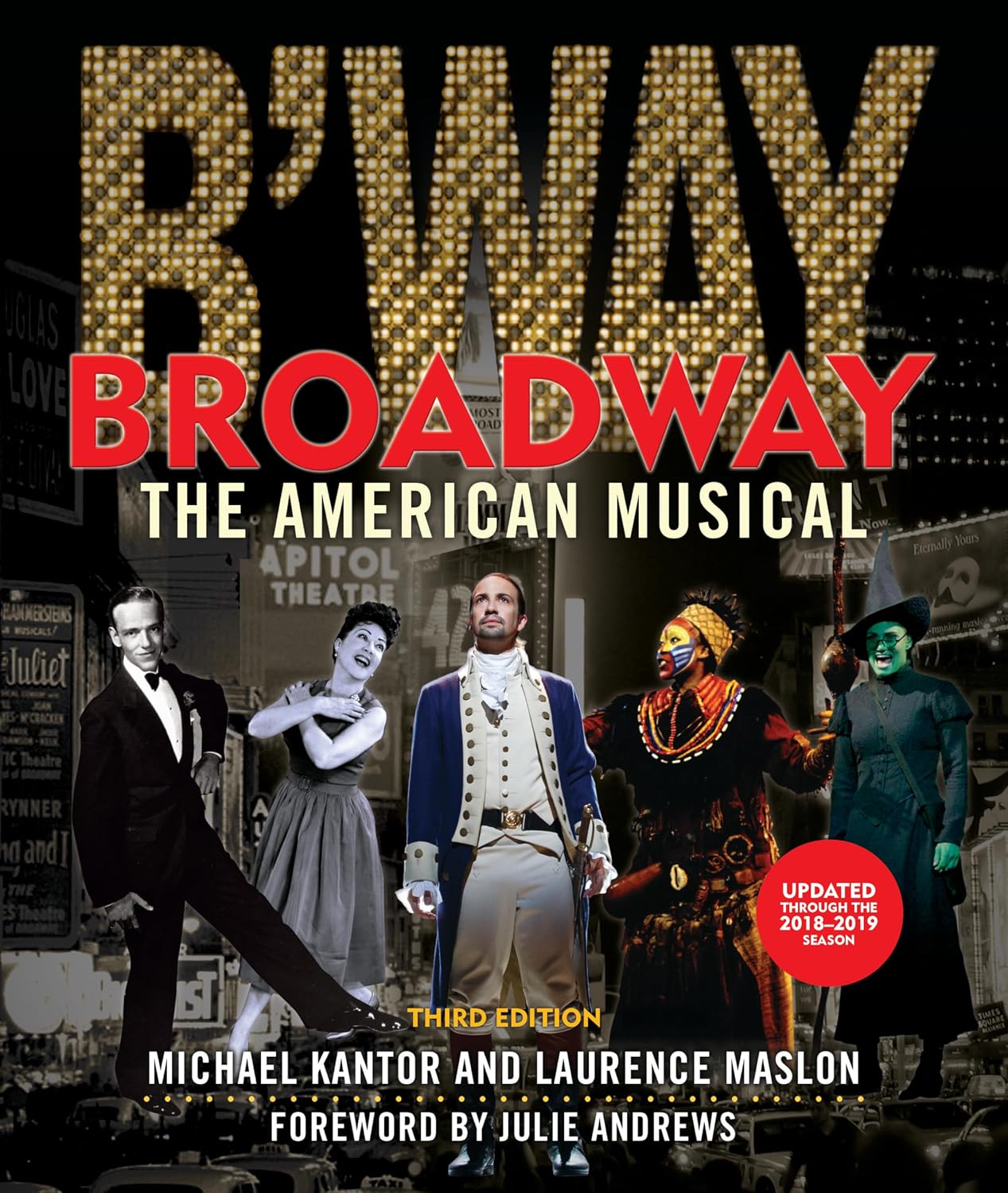
A book tracing the evolution of the musical theatre art form.
Verified — real listing, active link
A trivia game built entirely around Broadway and musical theatre knowledge.
Verified — real listing, active link
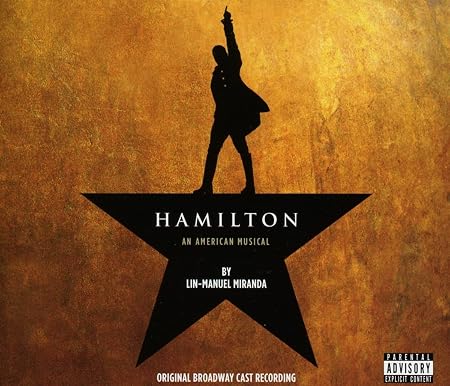
A physical CD cast recording for fans who prefer owning music outright.
Verified — real listing, active link
How the modern musical took shape: from ballad opera and vaudeville through Rodgers and Hammerstein to today's book, concept, and jukebox musicals.
Jukebox musicals don't simply borrow famous songs. The real work is inventing reasons those songs belong to new characters and a new story, something every production from Ain't Misbehavin' to Mamma Mia! has had to solve in its own way.