FeaturedGift Set
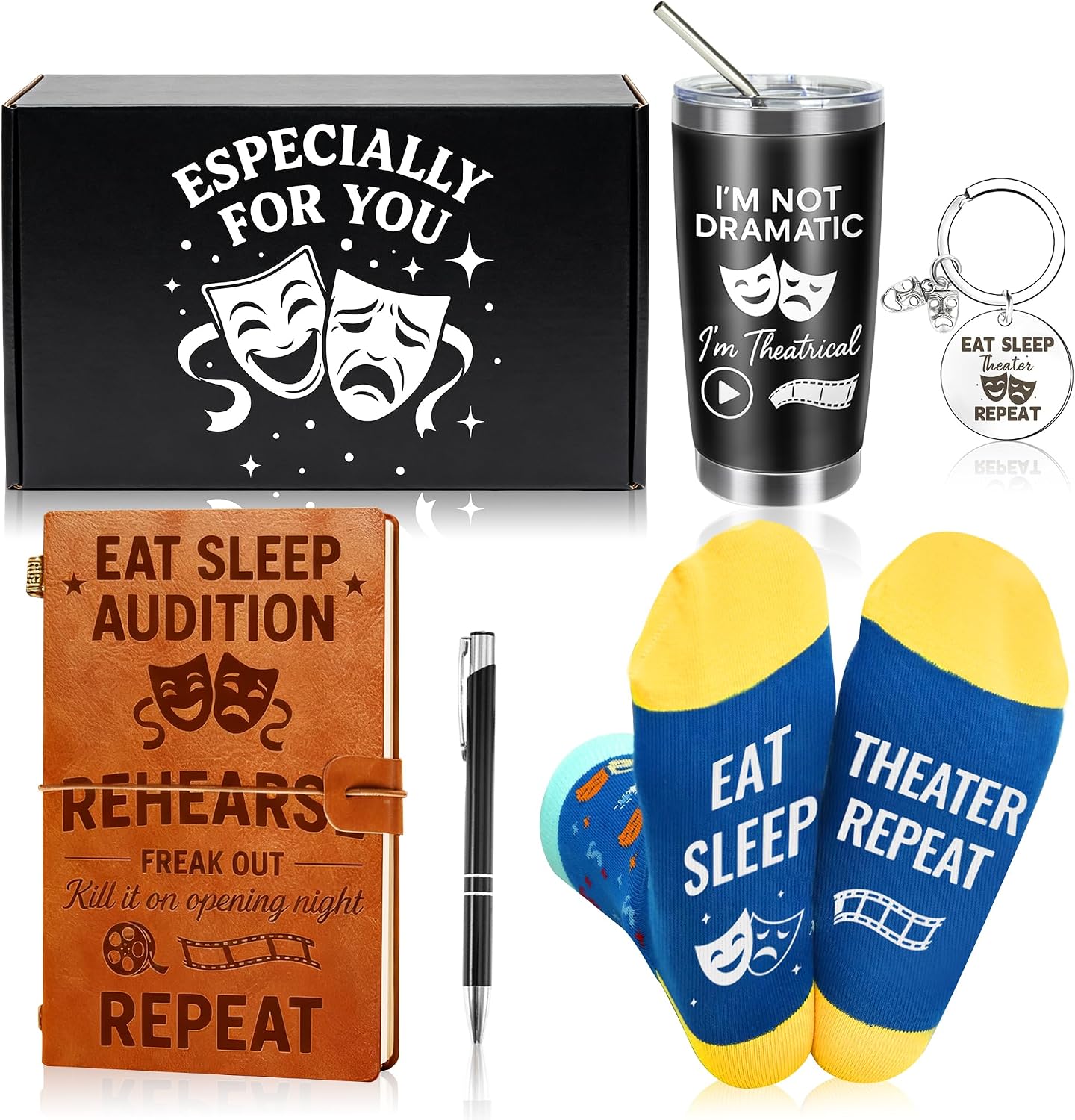
Musical Theatre Fan Gift Box
A bundled gift box combining several small musical theatre-themed items.
Verified — real listing, active link
Amazon
Check Price
Musical Theatre Guides
Ask when the musical began and you'll get a different answer depending on who you ask — and that disagreement is itself the more honest starting point than any single date. Historians and theatre writers have proposed several candidates over the years, and the fact that none of them has settled the question isn't a gap in the research. It reflects something true about how the form actually came together.
Part of the confusion is that "musical theatre" and "the musical" aren't quite the same thing, even though the phrases get used interchangeably. Musical theatre, broadly, is any staged performance that combines drama with singing — a category so wide it stretches back through opera, and further still. The modern musical is narrower: a form defined less by any one ingredient than by how thoroughly its ingredients are integrated with each other, so that song, dance, dialogue, and staging are all working on the same story rather than competing for attention.
That distinction matters, because it reframes the whole history that follows. The question worth asking isn't "who invented the musical?" It's closer to: at what point did audiences, and the people writing for them, come to expect songs and dances to belong to the story being told, rather than sitting alongside it? That's a gradual shift, not an invention, and it's the throughline of everything below.
Several theatrical traditions fed into what eventually became the modern musical, and it's worth naming them without treating them as rough drafts of something they weren't trying to be.
Opera is the oldest of these threads — a European form built on the idea that a story could be told almost entirely through music. Ballad opera, which emerged in 18th-century England, pushed in a more populist direction: John Gay's The Beggar's Opera (1728) set new lyrics to familiar tunes and interspersed them with spoken dialogue, partly as satire of the imported Italian opera of its day. Britannica traces a direct line from ballad opera through the light operas of Gilbert and Sullivan and into musical comedy — an early example of the pattern that recurs throughout this history: a popular form answering, and eventually absorbing, a more formal one.
Operetta arrived in the 19th century as something similarly satirical and farce-driven, drawing on Italian commedia dell'arte and French vaudeville as much as on opera itself. Jacques Offenbach's Orphée aux enfers used Greek mythology as cover for pointed commentary on contemporary Paris — comedy first, myth second. American audiences developed their own appetite for the form soon after: composers like Victor Herbert built a domestic operetta tradition around the turn of the 20th century, still rooted in European convention but performed for, and increasingly shaped by, American theatregoers rather than imported wholesale.
Vaudeville is a different kind of ancestor. By the time it reached American stages, it had become a variety format: ten or fifteen unrelated acts — singers, comedians, acrobats, animal trainers — sharing a bill with no throughline connecting them. Revue, which followed, kept that anthology structure but organized it around a topical or comic theme, still without a book or characters carrying through the evening.
One further antecedent has to be named honestly rather than skipped: the 19th-century blackface minstrel show. By the 1840s, blackface minstrel shows had become a major form of popular entertainment in the United States, built on racist caricature of Black Americans. Minstrelsy also contributed performers, songs, commercial practices, and variety conventions to the broader entertainment culture that later included vaudeville and revue. Naming that lineage is different from treating it as a credit; it belongs in this history as a documented, exploitative predecessor, not as an early musical in any admiring sense.
None of these forms was "an early musical" waiting to be perfected. Each was its own thing, made for its own audience. What they collectively supplied — song built for the popular stage, comic structure, variety pacing, satirical bite — is what later got pulled together into something more unified.
By the turn of the 20th century, American commercial theatre was pulling away from imported European operetta and toward something that sounded, and moved, more like the country producing it. Coming up through his family's vaudeville act, George M. Cohan brought a vaudeville performer's instinct for pace and directness to full-length Broadway shows — Little Johnny Jones (1904), built around a brash, distinctly American lead character rather than European royalty or myth. Cohan became one of the figures most closely associated with the rise of distinctly American musical comedy.
What musical comedy offered wasn't yet integration in the modern sense. Songs were often interchangeable between shows, plots were thin scaffolding for specialty numbers, and a hit tune could be dropped into an unrelated production without anyone minding much. But the relationship between dialogue, song, dance, and comedy was tightening compared to vaudeville's loose anthology format — everything now nominally served one evening-length story, even if the seams still showed.
New York's theatre district gave this evolving form something it hadn't had before: a concentrated commercial industry, with producers, houses, and audiences all in one place, competing and copying each other's successes at speed. What Broadway actually is — the institutional and commercial infrastructure of that district — is a separate story from the musical's artistic development, but the two are inseparable in practice. Broadway didn't invent the musical's ingredients. It gave them a marketplace dense enough to force rapid experimentation, and a production system capable of scaling whatever worked.
That density is part of why New York, rather than any single theatre or writer, gets credit as the place where the modern musical took shape. It wasn't a laboratory with one experiment running. It was dozens of shows a season, testing dozens of approaches, with the successful ones getting studied and imitated almost immediately.
The more important turning point isn't a venue — it's a shift in what songs were for. Jerome Kern, Guy Bolton, and P.G. Wodehouse's small-scale musicals at the Princess Theatre between 1915 and 1918 are usually cited as the clearest early example. These weren't the first shows to attempt integrating song with story — that attempt goes back further than any of them — but the Princess Theatre team did it well enough, and consistently enough, to change what other writers thought was possible on a modest budget with a believable, human-scale plot.
This is the shift worth holding onto, more than any single show: songs stopped being things a character paused to perform, and started being things a character needed in order to express what the scene required. That's a change in function, not just quality, and it's the hinge the rest of this history turns on.
Show Boat (1927), by Kern and Oscar Hammerstein II, is where that shift became impossible to ignore. Adapted from Edna Ferber's novel, it took on racial prejudice, addiction, and a mixed-race marriage — subjects operetta and musical comedy had no interest in — and used song as a direct extension of those themes rather than a break from them. Historians commonly describe it as the moment the American musical theatre split into a before and after; that's a strong claim, and it's worth stating as the historical consensus rather than an objective fact, but it's a widely shared one for good reason. Show Boat didn't resolve into a stable new formula overnight — operetta and musical comedy both persisted alongside it for years — but it proved the audience for a musical willing to be about something.
Through the 1930s and into the 1940s, book, score, choreography, character, and staging kept moving closer together, unevenly and by different routes. George Gershwin's Porgy and Bess (1935) pushed toward opera's end of the spectrum. Rodgers and Hart's Pal Joey (1940) built a musical around a genuinely unsympathetic lead, with songs doing real character work. None of this happened on a single timeline with one show leading cleanly to the next — it's better described as several writers arriving at similar instincts from different directions, in the same decade.
Oklahoma! (1943) became the landmark most often associated with what later critics called the "integrated musical" — a show in which song, dance, character, staging, and dialogue work together in service of the story. Rodgers and Hammerstein's version of that idea — deployed with unusual confidence, from the opening number onward, in a show with no chorus line to open on — is a documented, real contribution, and the Library of Congress's National Recording Registry entry for the original cast recording reflects how significant its reception was at the time.
What's worth resisting is the flatter version of that story, where Rodgers and Hammerstein simply invented integration. They didn't. Pal Joey and The Boys from Syracuse (1938) had already moved in that direction; so, differently, had Porgy and Bess. What Oklahoma! did was demonstrate that a thoroughly integrated musical could also be an enormous commercial hit — and that combination, more than the technique alone, is what made the rest of Broadway follow.
Its original cast recording also changed what happened after a Broadway show closed each night: the production could now travel home with its audience. Recordings of Broadway material existed before 1943, but the Oklahoma! album is commonly regarded as the first original Broadway cast album in the modern sense, and it helped establish the cast album as a lasting part of musical-theatre culture — a listening habit that later shaped how Broadway vinyl collecting works today.
The two decades after Oklahoma! — the period usually called the Golden Age — didn't repeat that one formula so much as keep expanding what an integrated musical could carry: bigger emotional range, more ambitious choreography as a storytelling tool in its own right (Agnes de Mille's work on Oklahoma! itself and Jerome Robbins's later work both did significant work here), and increasingly varied subject matter. West Side Story (1957), with Robbins directing and choreographing a score by Leonard Bernstein and lyrics by a young Sondheim, is often pointed to as a high-water mark for that period specifically because dance carried as much of the storytelling as the songs did — gang rivalry and tragedy expressed through movement, not narrated around it. But by the late 1960s, some writers were reaching for structures the book-musical format didn't easily support — shows organized around a theme or idea rather than a chronological plot.
Stephen Sondheim, working with director-producer Harold Prince, is where that reach became a body of work. Company (1970) is often credited as Broadway's first fully realized concept musical — a series of scenes examining marriage through one character's relationships rather than a conventional plot — and Follies (1971) pushed further into structural experimentation, folding past and present performers onto the same stage at once. Sondheim's catalog after that kept testing what subject matter a musical could responsibly hold — obsession, ambition, violence, self-doubt — without the genre needing to soften any of it into reassurance. The accurate claim isn't that Sondheim changed everything single-handedly; it's that his sustained body of work, across three decades, measurably widened what audiences and producers would accept a musical being about and how it could be structured.
Today "the musical" isn't one form so much as a shared toolkit used several different ways at once, often within the same season: traditional book musicals building outward from Oklahoma!'s model; sung-through works with no spoken dialogue at all; concept musicals still working in Sondheim's shadow; jukebox musicals built around pre-existing songbooks (Mamma Mia!, Jersey Boys) rather than original scores; a steady stream of revivals and film adaptations; and more experimental, structurally unconventional work that borrows freely from outside musical theatre's own traditions — contemporary shows built around a single narrator's retelling, or scored in idioms the form rarely used a generation ago. None of these approaches has replaced the others. They coexist, sometimes in the same theatre district in the same month, because none of them fully supersedes what came before — they're variations on an increasingly wide toolkit, not a sequence of improvements.
Return to the question this piece opened with, and the honest answer is that the musical's history isn't really a story of one formula being discarded for a better one. It's a story of the relationship between story, music, performance, and staging getting steadily more integrated, tested from more directions, by more people, over more than two centuries — with real turning points along the way, but no single moment where the modern musical simply arrived. Ballad opera didn't fail and get replaced by operetta; operetta didn't fail and get replaced by musical comedy. Each addition widened what the next generation of writers had available to draw on, which is a slower and less tidy story than "invention," but a more accurate one — and, for anyone who wants to go deeper into any single chapter of it, there's more in our guide to musical theatre books than one article can responsibly cover.
Some links in this guide may be affiliate links. See our affiliate disclosure.
A bundled gift box combining several small musical theatre-themed items.
Verified — real listing, active link
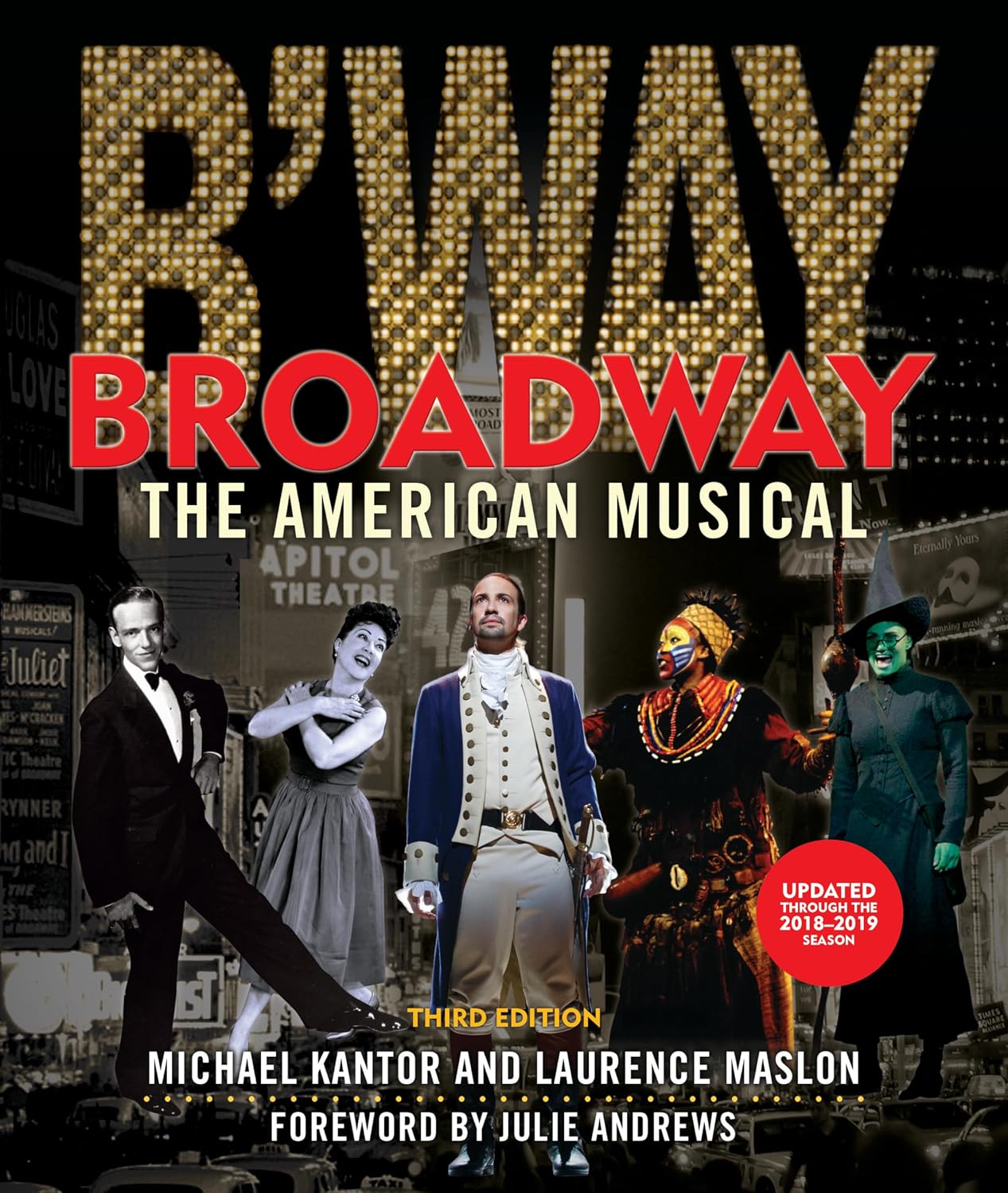
A book tracing the evolution of the musical theatre art form.
Verified — real listing, active link
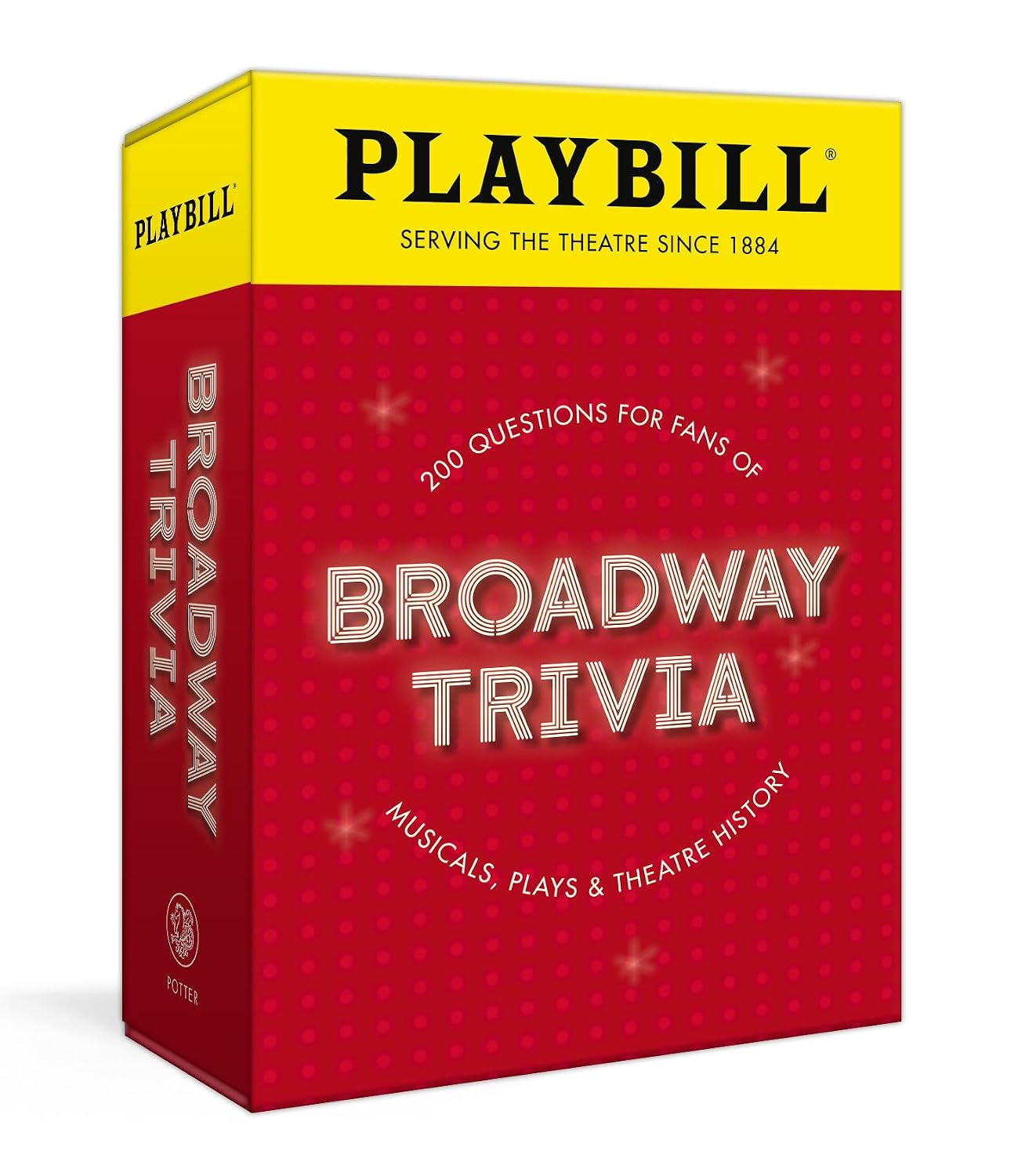
A trivia game built entirely around Broadway and musical theatre knowledge.
Verified — real listing, active link
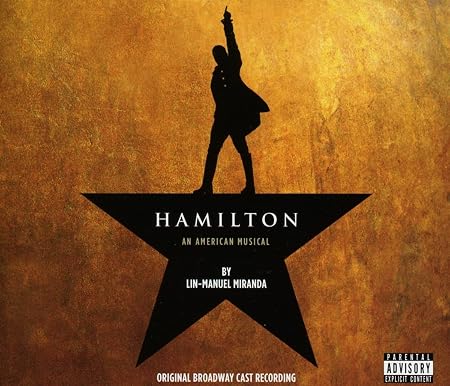
A physical CD cast recording for fans who prefer owning music outright.
Verified — real listing, active link