FeaturedGift Set
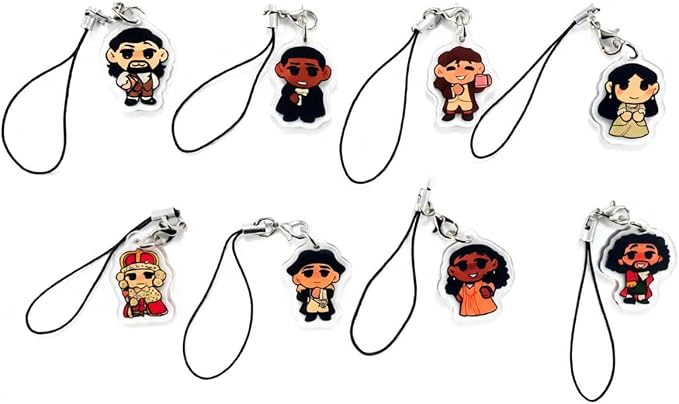
Hamilton Fan Gift Set
A bundled set combining a few smaller Hamilton items into one gift.
Verified — real listing, active link
Amazon
Check Price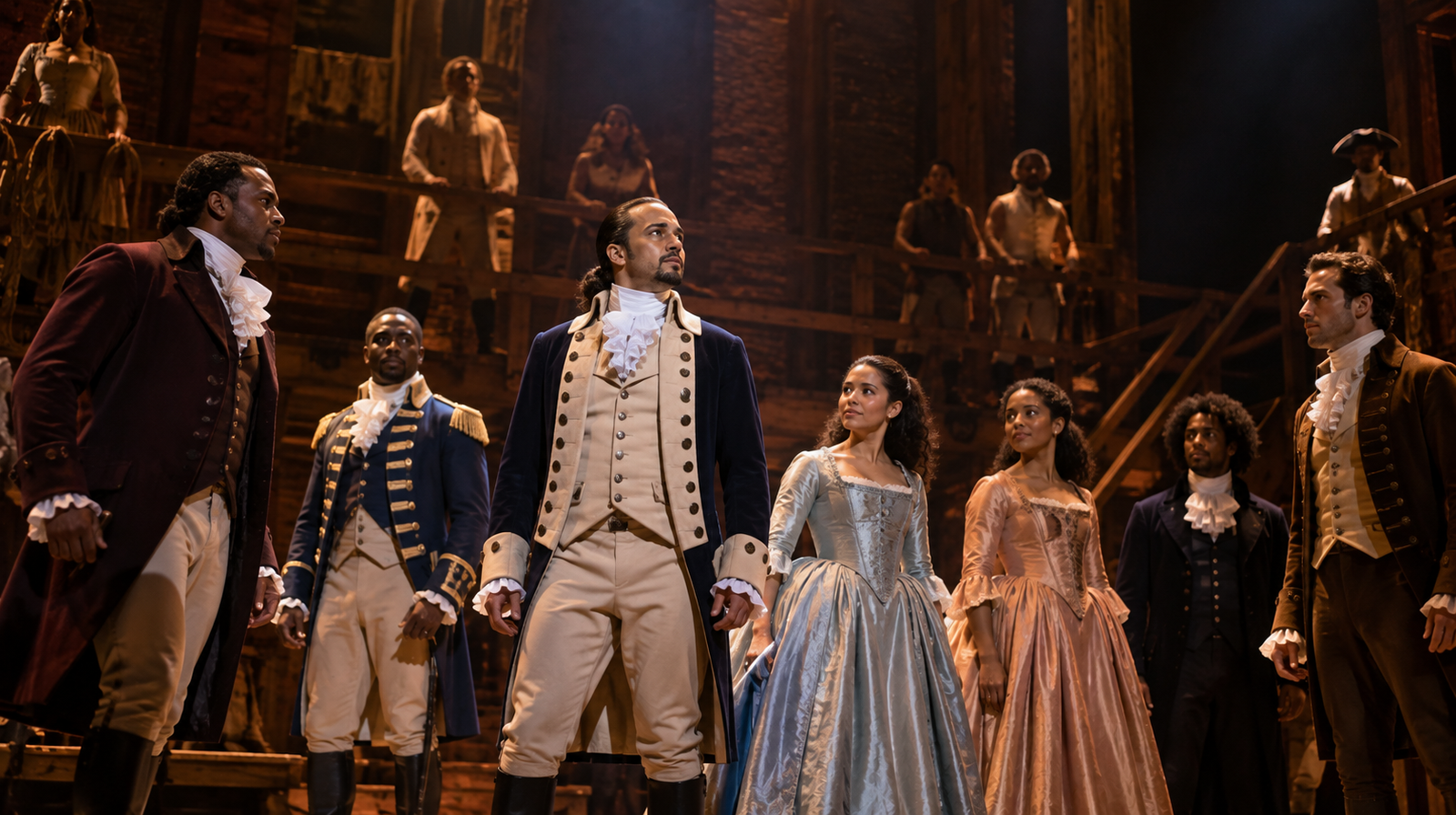
Hamilton Guides
Hamilton throws an unusually large cast of real historical figures at its audience in a short amount of stage time — cabinet secretaries, generals, in-laws, war buddies, and a king, most of them introduced within the first twenty minutes. For a first-time viewer, keeping track of who's related to whom, who's actually rivals, and who just shares a few scenes can be genuinely difficult, especially since the show compresses years of history into single songs. This guide is meant to help with that. It covers each major character as the musical actually uses them dramatically, and — since Hamilton is a dramatization, not a documentary — where the historical record behind that character agrees with, simplifies, or departs from what happens on stage.
The musical's opening number does a lot of work fast: an orphan, born out of wedlock in the Caribbean, loses his mother young, works as a clerk, and writes his way off the island on the strength of a single essay describing a hurricane. That framing is dramatized but not invented — Hamilton's father abandoned the family, his mother died when he was a boy, and local benefactors did fund his education after his writing impressed them. What the musical compresses is how long and uncertain that path actually was; on stage it plays as a single, propulsive escape.
Once in New York, Hamilton's defining trait — on stage and in the historical record alike — is a kind of relentless, almost compulsive ambition expressed through writing. He talks and writes faster than everyone around him, a trait the musical uses as both his greatest asset and the thing that eventually isolates him. His central relationships map onto that: Laurens and Lafayette give him wartime camaraderie, Washington gives him a mentor who repeatedly reins him in, Eliza gives him a domestic life he struggles to fully inhabit, Angelica gives him an intellectual match he can't have, and Burr gives him a rival whose caution he never respects until it's too late. The musical's tragedy isn't really that Hamilton fails — historically, he succeeds at nearly everything he attempts — it's that the same drive that produces the Federalist Papers and the national financial system also wrecks his marriage and, eventually, gets him killed.
Burr functions as the musical's narrator and its argument against Hamilton, both at once. Where Hamilton talks his way into every room, the musical's Burr — voiced through "Wait for It" and its own patient philosophy — advocates waiting, watching, and not showing your hand. That contrast is a real dramatic simplification of two actual political careers, but it's not fabricated from nothing: the historical Burr was genuinely more cautious and less ideologically committed in print than Hamilton, and the two men were real, long-running rivals whose competition touched New York politics, national banking, and eventually the 1800 presidential election, where Hamilton's opposition helped decide the outcome against Burr. Their story ends where the historical record says it did: a duel at Weehawken, New Jersey, on July 11, 1804, that killed Hamilton the next day and effectively ended Burr's political career even though he was never convicted of anything. For a closer look at how the musical frames Burr's own philosophy of patience, what "Wait for It" actually means covers that in more depth than fits here.
Eliza begins the musical as one half of a courtship plot and ends it as the character who effectively decides how the story is remembered — a shift that mirrors her real life closely. She married Hamilton in 1780, ran a household through years of his political controversies and one very public affair, and then, after his death in 1804, spent the next five decades working to secure his legacy and caring for causes he'd cared about, including co-founding what became New York City's first private orphanage — pointedly, for a man who'd been an orphan himself. Exactly what she preserved from that marriage, and what she may have destroyed, is its own genuinely disputed question, covered separately in whether Eliza really burned her letters. The musical's back half leans hard into her perspective specifically because the historical Eliza's own choices — what she preserved, what she publicized, how she outlived nearly everyone else in the story — genuinely shaped how later generations understood Hamilton at all. Her relationship with her sister Angelica, in particular, is presented as loving and complicated rather than simply rivalrous, which matches how both women actually wrote about each other. What that specific choice means for the musical's ending is covered at more length in why Eliza gasps at the end of Hamilton.
Angelica is written as the woman who meets Hamilton first, recognizes exactly what he is, and chooses her sister over her own interest — the emotional center of "Satisfied." That's a meaningful place where the musical compresses history for dramatic effect: by the time Angelica actually met Hamilton, in December 1780, she had already eloped with and married John Barker Church three years earlier and had two children with him. The musical moves that marriage later in the timeline (it surfaces in "Non-Stop") to preserve the love-triangle structure of "Satisfied," which is a deliberate dramatic choice rather than a documented sequence of events. What is genuinely documented is the closeness between Angelica and Hamilton afterward — decades of warm, flirtatious letters survive between them — though whether that closeness ever became more than friendship is something historians actively disagree about, with no surviving evidence resolving it either way. What "Satisfied" is actually doing structurally goes further into that number specifically.
Washington's role in the musical — demanding mentor, moral center, the one person whose approval Hamilton visibly craves — tracks closely with the documented relationship. Hamilton served as Washington's aide-de-camp during the Revolutionary War, a job that was mostly administrative but put him at the center of Washington's "military family," and Washington later made him his first Treasury Secretary once elected president. The relationship wasn't uniformly smooth — the two had a real falling-out in February 1781 when Washington rebuked Hamilton for keeping him waiting, and Hamilton, by his own account, abruptly quit as aide before the two later reconciled — but the musical's broader shape of the relationship (mentorship, real affection, real friction, and Washington still trusting Hamilton enough to have him draft the 1796 farewell address) matches the documented record closely rather than inventing a dynamic.
Lafayette is the musical's burst of manic energy — the French volunteer who shows up mid-war and immediately becomes part of Hamilton's circle. That's grounded in fact: Lafayette left France against its official neutrality to join Washington's army, quickly became one of Washington's most trusted officers, and formed real, lasting friendships with both Washington and the younger men on his staff, including Hamilton and Laurens. He and Hamilton did fight together at Yorktown in 1781, the battle the musical treats as their shared triumph. The musical's Lafayette is a compressed, high-energy version of a genuinely significant historical figure whose later life (returning to France, surviving the French Revolution) falls entirely outside the show's timeline.
Laurens is written as Hamilton's closest friend and conscience — the character pushing hardest for the Revolution to mean something beyond independence, specifically through his real campaign to recruit and arm enslaved men in exchange for their freedom, an effort South Carolina's legislature ultimately rejected. That abolitionist commitment is well documented and the musical doesn't overstate it. What the musical leaves genuinely ambiguous — correctly, in the sense that the historical record itself is ambiguous — is the exact nature of Hamilton and Laurens's friendship. Their surviving letters are intensely affectionate by any standard, including lines like Hamilton's "I wish it were in my power, by actions rather than words, to convince you that I love you," and historians disagree sharply about how to read that language: some read it as the era's conventional, often effusive style of male friendship, while others argue it points to something more. No document settles the question either way, and this guide isn't going to resolve it for you — that uncertainty is real, not a gap in research.
Mulligan is a smaller role dramatically but a real person doing real intelligence work. He and Hamilton knew each other from Hamilton's student days — Hamilton reportedly boarded with him — and Mulligan's actual tailor shop in New York, patronized by British officers, did give him a genuine vantage point for passing along military information to the Continental Army, work credited in multiple accounts with helping protect Washington from at least one capture attempt. He and Hamilton later became founding members of the New York Manumission Society together, which the musical doesn't dramatize directly but which fits the historical friendship. The musical's comic, high-energy treatment of him is a tonal choice; the espionage itself isn't invented.
Jefferson arrives in Act Two as Hamilton's opposite number, and the rivalry the musical stages — rap battles over national banking and federal power — reflects a real and genuinely bitter conflict, even if the format is obviously theatrical. As Secretary of State under Washington, Jefferson opposed Hamilton's financial program almost from the start; the two men's dispute over a national bank and the assumption of state debts became one of the defining fights of Washington's first term, eventually resolved through the Compromise of 1790, brokered partly over the dinner Jefferson hosted with Hamilton and Madison that the musical dramatizes in "The Room Where It Happens". That same disagreement hardened into the country's first real party split, with Jefferson and Madison organizing what became the Democratic-Republican opposition to Hamilton's Federalists. The musical compresses years of pamphlet warfare and cabinet meetings into a few songs, but the underlying ideological conflict is not exaggerated.
Madison gets comparatively little stage time, which fits his more supporting role in the musical's version of events even though his actual historical importance — co-author of the Federalist Papers alongside Hamilton, later a principal architect of the Constitution's ratification — was enormous. The show's more relevant point is the reversal: Madison and Hamilton were genuine collaborators in the 1780s, then genuine opponents by the 1790s, once Madison broke with Hamilton's financial program and allied with Jefferson. That reversal is real and not softened for drama.
George III's three songs are the musical's clearest departure from strict realism — a musically distinct, comic aside rather than a documented historical scene. His actual reaction to American independence was reportedly calmer than his stage persona suggests, and modern historians tend to view him more sympathetically than the Revolution's own propaganda did. The musical isn't trying to correct that record; it's deliberately presenting George the way Hamilton's characters, and the Revolution's own rhetoric, saw him — tyrannical and absurd — which is a legitimate dramatic choice as long as it's understood as perspective rather than reportage.
Philip is Hamilton and Eliza's eldest son, and his death is the musical's clearest use of real chronology for emotional effect. In November 1801, Philip and a friend heckled a young lawyer named George Eacker over a speech Eacker had given attacking Hamilton; the dispute escalated into a duel. Philip, following his father's own advice about dueling protocol, declined to fire first — and was shot and mortally wounded regardless, dying at 19. The musical stages this as a direct, painful echo of the duel that will later kill Hamilton himself, which is not an invented parallel; the actual duels shared a location, and the second one visibly haunted Hamilton's own conduct in his final duel with Burr three years later.
Eacker is a minor but historically real figure — a young lawyer whose public criticism of Hamilton led, through Philip's response to it, to the duel that killed Philip. The musical gives him just enough characterization to make that outcome land; there isn't a larger historical record of Eacker beyond his connection to this one event and his subsequent early death.
The musical's references to "Theodosia" actually span two real people. Earlier mentions of Burr's romantic attachment concern Theodosia Bartow Prevost, a widow of a British officer whom Burr married in 1782; by the time of "Dear Theodosia," the song is addressed to their infant daughter, Theodosia Burr, born the following year. Burr's wife died in 1794; his daughter, later Theodosia Burr Alston, was lost at sea in 1813 under circumstances that remain genuinely unresolved. The musical's warmth toward this relationship is consistent with the historical record of how devoted Burr was to his daughter's education and upbringing.
A handful of other figures matter without needing full sections. Peggy Schuyler, the youngest Schuyler sister, appears mainly to round out the sisters' introduction rather than to carry her own plot. Charles Lee and Samuel Seabury exist to give Hamilton early antagonists — a General he clashes with and a Loyalist pamphleteer he publicly rebuts — both drawn from real, if brief, historical episodes. Maria Reynolds represents Hamilton's real 1791 affair, which her husband James Reynolds turned into blackmail; the scandal became public in 1797 when Hamilton, rather than let unrelated financial accusations stand, published a lengthy pamphlet admitting the affair to clear himself of embezzlement charges — a decision that protected his integrity as Treasury Secretary at direct cost to his marriage and any future in national office. The Doctor and the wider ensemble mostly serve structural and atmospheric functions rather than individual arcs.
At the center of the network are Hamilton and Burr, whose rivalry runs from their first meeting through the final duel and structures the whole show. Hamilton's marriage to Eliza connects him by extension to Angelica, and the Hamilton–Eliza–Angelica triangle carries as much emotional weight as any romantic plot in the show, precisely because it's built on loyalty and restraint rather than betrayal. Washington sits above Hamilton as commander and then president, a relationship that gives Hamilton both his early legitimacy and a check on his worst impulses. Laurens and Lafayette form Hamilton's wartime brotherhood alongside Washington's staff, a friendship group that Laurens's early death and Lafayette's return to France both eventually dissolve. Jefferson enters later as Hamilton's ideological mirror image, with Madison orbiting Jefferson's side of that fight despite having once stood on Hamilton's. Burr's own family life runs in parallel to Hamilton's, most visibly in "Dear Theodosia," where the two rivals briefly share the same hopes for their children — Burr for his daughter, Hamilton for Philip — before Philip's death and Hamilton's own death sever that parallel entirely.
"Hamilton gets history wrong" is too blunt a way to put this, and mostly untrue in the specific sense people mean it. The musical is transparent about being a dramatization, and its most significant departures from the record are compressions and reorderings in service of theatrical structure, not fabrications. The clearest documented example is Angelica Schuyler's marriage: she had already been married to John Barker Church for three years and had two children by the time she met Hamilton, a fact the musical moves later in its timeline to preserve the "Satisfied" love-triangle. Other choices are simplifications rather than distortions — George III's characterization flattens a more complicated historical figure into a single comic perspective, and the yearslong political grind between Hamilton and Jefferson gets compressed into a handful of songs. And some questions are genuinely disputed among historians rather than settled one way or the other by the musical or by anyone else — the exact nature of Hamilton's friendship with Laurens, and whether his closeness with Angelica ever crossed into romance, both fall into that category, and the honest answer in both cases is that the surviving evidence doesn't resolve it.
Underneath the specific relationships, the cast is organized around a handful of recurring tensions the musical returns to from different angles. Hamilton and Burr dramatize action versus patience, not as a simple contrast of virtue and vice but as two genuinely defensible approaches to a dangerous, uncertain political world. Eliza and Angelica dramatize loyalty and restraint — a sisterly bond that survives real strain rather than collapsing into rivalry. Washington and Jefferson, in very different ways, represent the exercise of political power under real constraint, one through personal authority and reluctant retirement, the other through ideological conviction and eventual victory. Philip's death and Eliza's decades of widowhood carry the show's argument about legacy: that what gets remembered is often decided less by what someone accomplished than by who survives to tell the story and how. None of the characters map cleanly onto a single idea — Hamilton is ambition and self-destruction at once, Burr is caution and its own kind of ruthlessness — which is part of why the relationships between them do more storytelling work than any individual biography could.
Taken individually, most of Hamilton's characters are recognizable historical figures with well-documented lives. What makes the musical work is how tightly their relationships are wound around each other — rivalries that double as arguments about how to live, friendships that don't survive the war, a marriage that outlasts a scandal and then a death. Once those connections are clear, the songs, the political fights, and the emotional turns in the second act tend to make a lot more sense on a second viewing than they did on the first.
Some links in this guide may be affiliate links. See our affiliate disclosure.
A bundled set combining a few smaller Hamilton items into one gift.
Verified — real listing, active link
The Grammy-winning cast recording, available on CD and vinyl.
Verified — real listing, active link
The companion book to the musical, with the complete lyrics and the story behind the show.
Verified — real listing, active link
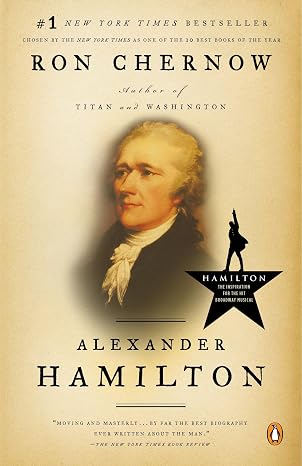
The Ron Chernow biography that inspired Lin-Manuel Miranda to write the musical.
Verified — real listing, active link