FeaturedGift Set
Musical Theatre Fan Gift Box
A bundled gift box combining several small musical theatre-themed items.
Verified — real listing, active link
Amazon
Check Price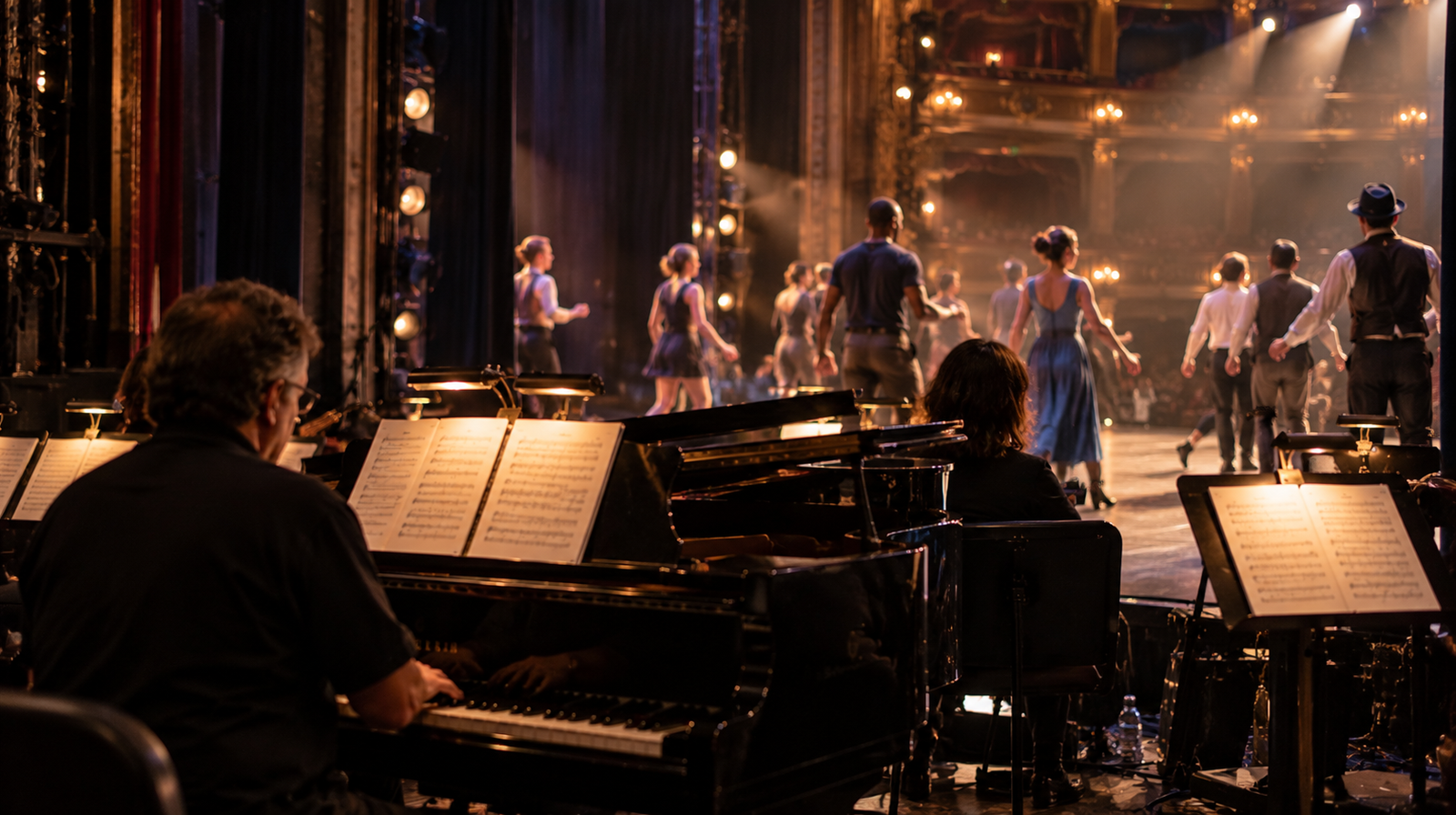
Musical Theatre Guides
A jukebox musical builds a stage story around songs that already existed before anyone thought to put them in a theatre. The music comes first, written for a record or a radio audience, and the story arrives later, built to hold that music together. That order of operations is the whole puzzle of the form: everything else about how a jukebox musical works, and why some feel seamless while others feel like a very long medley, follows from it.
A jukebox musical is a stage musical built around a catalog of pre-existing, generally already-famous songs rather than a score composed specifically for that production's characters and story. The songs might come from one artist, one band, or one songwriter's body of work, and the stage story is constructed afterward to give them a dramatic home.
That definition covers a wide range of shows that otherwise look quite different from each other. Some jukebox musicals tell the real biography of the artist who wrote or performed the songs. Others invent an entirely fictional plot and use the catalog as its soundtrack. A few barely bother with plot at all and instead present the songs in something closer to a concert with light narration between numbers. All three approaches get called jukebox musicals, which is part of why the term is more useful as a general description than as a strict technical category.
In an original-score musical, a composer and lyricist write songs specifically for the characters, the plot, and the moment in the story where each number lands. The song exists because that scene, for those characters, needed one. Nothing about it existed anywhere else first.
A jukebox musical inverts that process. The songs already had a life, an audience, and an emotional context of their own, often tied to a specific artist's voice or a specific decade of pop culture, before a single line of the stage script was written. The creative team's job is not to invent a song for a dramatic moment but to find or build a dramatic moment that a song already written for something else can now serve. Neither approach is inherently stronger than the other; they are simply solving different problems, and the history of the musical is full of both kinds of storytelling succeeding on their own terms.
Jukebox musicals tend to fall into a few recognizable patterns, though these are useful categories for talking about the form rather than an official or universally agreed-upon taxonomy.
Bio-musicals tell the real, or lightly dramatized, life story of the performer or group behind the catalog. Jersey Boys traces Frankie Valli and the Four Seasons from their working-class origins through fame and internal conflict, using their own hits as the chronological soundtrack to their actual career. Beautiful: The Carole King Musical follows songwriter Carole King's rise from Brill Building collaborator to solo performer. Tina dramatizes Tina Turner's life and survival, built around the songs that defined her career. In this category, the songs and the story share the same real-world timeline, which gives the creative team a built-in structure to work with.
Catalog-driven fictional stories take the opposite approach: an invented plot, populated by invented characters, built specifically to give an existing catalog somewhere new to live. Mamma Mia! wraps a fictional wedding-weekend comedy around ABBA's songbook. We Will Rock You imagines a dystopian future stripped of guitar music and rebuilds it around Queen's catalog. Escape to Margaritaville invents a beachside romantic comedy to house Jimmy Buffett's songs. Here, the songs have no built-in connection to the plot at all; the writers have to manufacture one from scratch.
Revue and catalog-centered forms sit at the loosest edge of the category. A show like Ain't Misbehavin', built around the songbook of Fats Waller, does not attempt a conventional plot so much as a themed performance of the material, with the personality and mood of the songs doing the work that a plot would otherwise do. The line between "musical" and "revue" gets genuinely blurry here, and that blurriness is itself part of the form's history rather than a flaw in it.
This is the actual craft problem underneath every jukebox musical, and it is more involved than simply picking a hit and finding a scene to drop it into.
A creative team building one of these shows has to think through what a given song is actually about beneath its original recorded meaning: who could plausibly be singing it now, in what situation, and why. A love song written for one specific relationship can be reassigned to a completely different pair of characters if the underlying emotional shape still fits. A song about longing can become a song about ambition, or grief, or rivalry, depending entirely on who is singing it and what has just happened onstage.
Placement matters as much as reassignment. The same song can function as a joyful opener, a heartbroken solo, or an ironic commentary on the scene around it, depending purely on where it sits in the story and what the audience already knows by the time it starts. Arrangement plays a role too: a song can be slowed down, stripped back, reharmonized, or split between characters in dialogue-like exchanges to make it carry dramatic weight it never needed to carry as a three-minute single. Some shows also lean on repetition, bringing a melody back later in an altered form once the audience has attached new meaning to it, borrowing a trick original scores use constantly and jukebox scores have to work harder to earn.
The transitions between songs matter just as much as the songs themselves. Because the score was not written to flow as a continuous piece, the book writer has to build connective tissue, dialogue, staging, or a musical bridge, that makes the jump from one existing song to the next feel like forward motion in the story rather than a playlist change.
The central creative tension in this form is that the songwriter, in almost every case, was not thinking about the eventual musical's characters or plot at all. A song written as a three-minute single for radio was never obligated to set up a scene, advance a conflict, or reveal something new about a character arc. Whatever dramatic usefulness it has in a stage show has to be discovered or constructed after the fact, and that is a fundamentally harder task than writing a song to already fit.
Christopher Ashley, who directed Escape to Margaritaville, described the standard the creative team held the Jimmy Buffett catalog to directly: "Every song has to feel inevitable and necessary to the story. Or it has to be such a pleasurable left turn that you say, 'Wow, I didn't see that coming, but I'm so happy about how they used that song.' Nothing can ever feel shoehorned." That distinction, between a song that feels earned and a song that feels shoehorned in because it is recognizable, is close to the whole critical conversation around jukebox musicals in a single sentence. It is not a judgment about the music's quality; it is a question of whether the story found a genuine reason for that specific song to exist in that specific moment.
Mamma Mia! remains the clearest example of catalog-driven storytelling working at scale: Catherine Johnson's book invents a mother, a daughter, and three possible fathers specifically so ABBA's songbook has somewhere fictional to land, and the show has toured and run continuously since 1999 partly because that invented story gives the songs new, specific stakes.
Jersey Boys takes the opposite structural approach, since its songs and its plot share the same real history. Frankie Valli and the Four Seasons' own hits appear roughly where they actually happened in the group's career, so the music functions as both soundtrack and historical evidence at once.
Beautiful: The Carole King Musical uses a similar bio-musical structure, tracking King's real professional and personal life through the songs she wrote, several of them originally for other performers before she recorded them herself, which adds an extra layer of reassignment on top of the usual jukebox structure. Readers who want the fuller biographical detail behind shows like this one, rather than the compressed stage version, tend to find it in the kind of songwriter and composer biographies covered in our guide to musical theatre books.
Ain't Misbehavin' represents the form's revue end: rather than building a plot around Fats Waller's songbook, it lets a small ensemble perform the material directly, trusting the songs' own personality and Waller's persona to carry the evening.
We Will Rock You leans hardest into invention, building a full science-fiction premise, a world where rock music has been outlawed, purely to give Queen's catalog a story urgent enough to justify the band's biggest anthems as plot points rather than just crowd-pleasers.
Escape to Margaritaville sits between the bio-musical and the purely fictional catalog show: it borrows Jimmy Buffett's laid-back persona and beachside mythology without dramatizing his actual biography, inventing characters who feel like they could exist inside a Buffett song rather than characters standing in for Buffett himself.
No. That is one of the more common misconceptions about the form. Bio-musicals like Jersey Boys, Beautiful, and Tina are built around a single artist's or group's real story, but that is only one branch of the category. Fictional catalog shows like Mamma Mia!, We Will Rock You, and Escape to Margaritaville use a single act's songbook without telling that act's life story at all. Other productions draw from multiple songwriters or a broader songbook tradition rather than one performer's catalog specifically, closer to the revue model Ain't Misbehavin' represents. The one thing every version shares is pre-existing music finding a new theatrical container; how personal that container is to the original artist varies enormously from show to show.
Jukebox musicals matter beyond their box-office reliability because they make an argument, whether or not any individual show intends to, about how flexible a song's meaning actually is. The same melody can carry wildly different emotional weight depending on who sings it, when, and why, and jukebox musicals are essentially a large-scale, decades-long experiment in testing exactly how far that flexibility extends.
The form also has a history tied closely to Black composers, performers, and arrangers who used it as a foothold in an industry that did not always welcome them elsewhere. A 2025 exhibition at the New York Public Library for the Performing Arts, drawing on the archives of its Billy Rose Theatre Division, documented how jukebox and revue-style musicals built around existing songbooks gave artists like Eubie Blake, Vinnette Carroll, and Micki Grant, and productions including Shuffle Along and Don't Bother Me, I Can't Cope, a route onto Broadway stages at points when the industry offered Black creators fewer other paths in. That history complicates any assumption that the form is a purely commercial, late-20th-century invention; its roots run through some of the more consequential and undercelebrated chapters of Black musical theatre history.
Understood that way, the jukebox musical is less a shortcut than a specific, demanding kind of adaptation, closely related to how musical theatre has evolved toward telling stories through whatever musical vocabulary a moment calls for, whether that vocabulary was invented for the occasion or borrowed and rebuilt from something the audience already loved. It sits alongside other structural choices, like the sustained, dialogue-free momentum of sung-through musicals, as one more answer to the same underlying question every musical has to solve: how does music actually carry a story forward.
A jukebox musical takes existing songs, generally written independently of any stage story, and gives them a new theatrical context. Its success as theatre depends less on how famous the songs are and more on how convincingly the music, the characters, the story, and the staging are actually brought together. Some shows manage that convincingly. Others are more honest about being a celebration of a catalog than a fully integrated drama, and that is a legitimate choice too, as long as the show does not pretend to be doing something it is not.
Some links in this guide may be affiliate links. See our affiliate disclosure.
A bundled gift box combining several small musical theatre-themed items.
Verified — real listing, active link
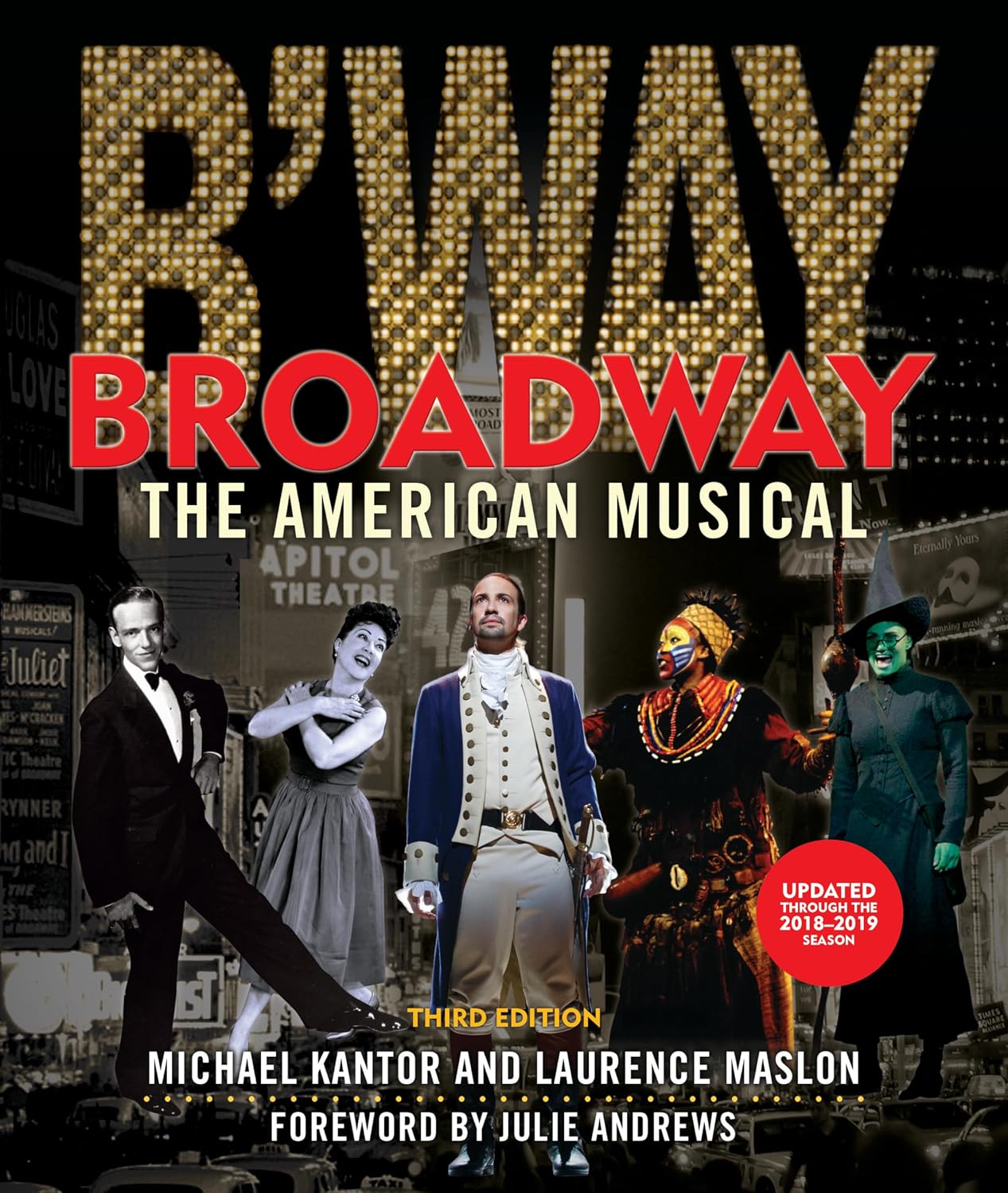
A book tracing the evolution of the musical theatre art form.
Verified — real listing, active link
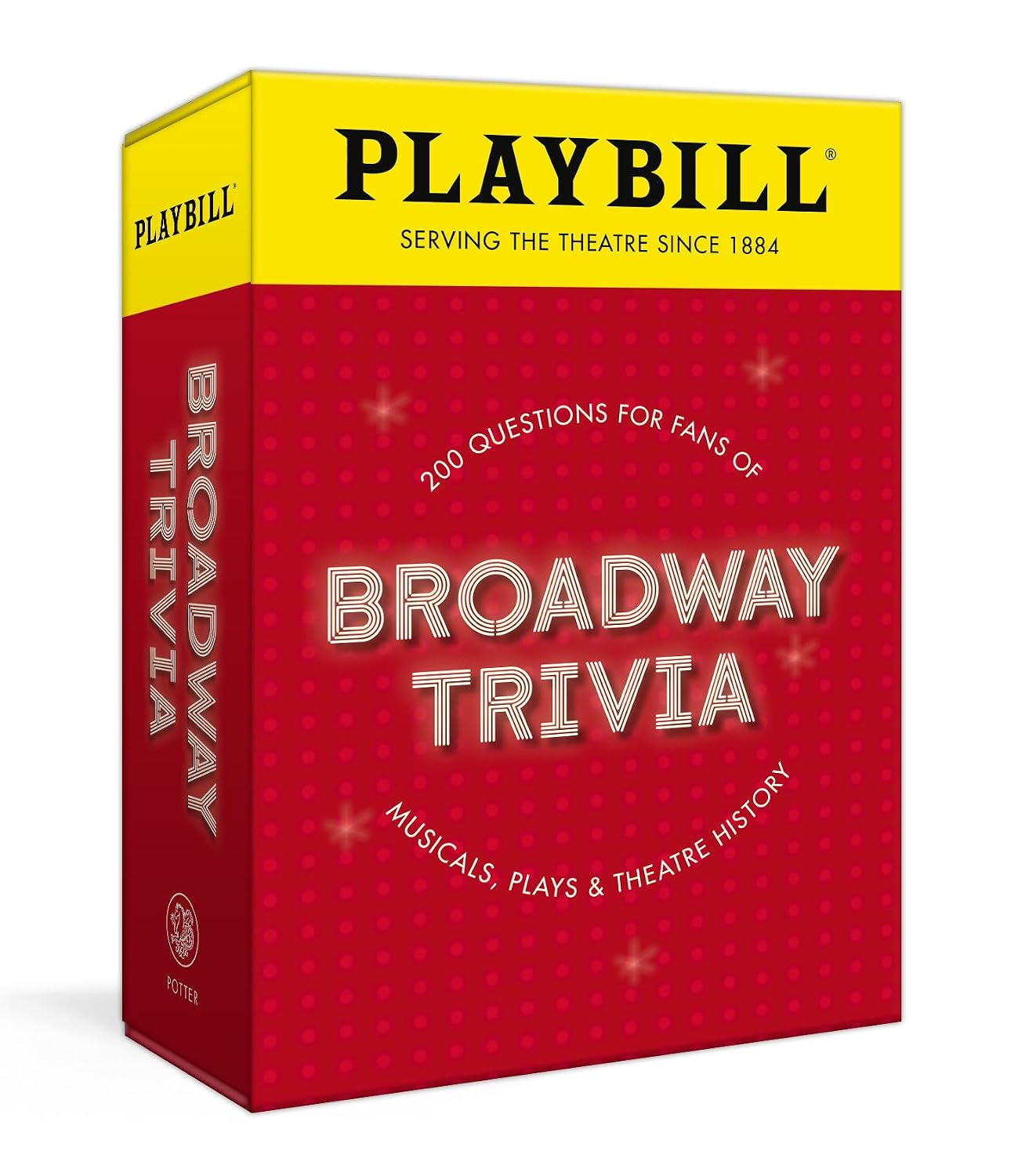
A trivia game built entirely around Broadway and musical theatre knowledge.
Verified — real listing, active link
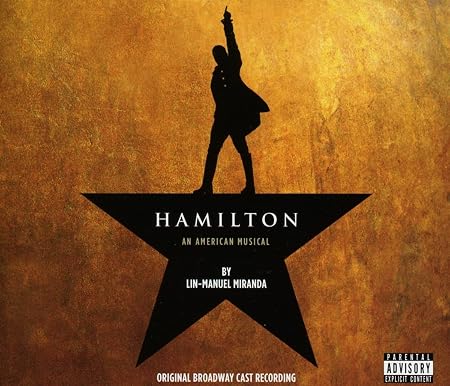
A physical CD cast recording for fans who prefer owning music outright.
Verified — real listing, active link
How the modern musical took shape: from ballad opera and vaudeville through Rodgers and Hammerstein to today's book, concept, and jukebox musicals.
What is a sung-through musical? Learn how shows like Hamilton and Les Misérables tell stories through continuous music instead of traditional spoken dialogue.