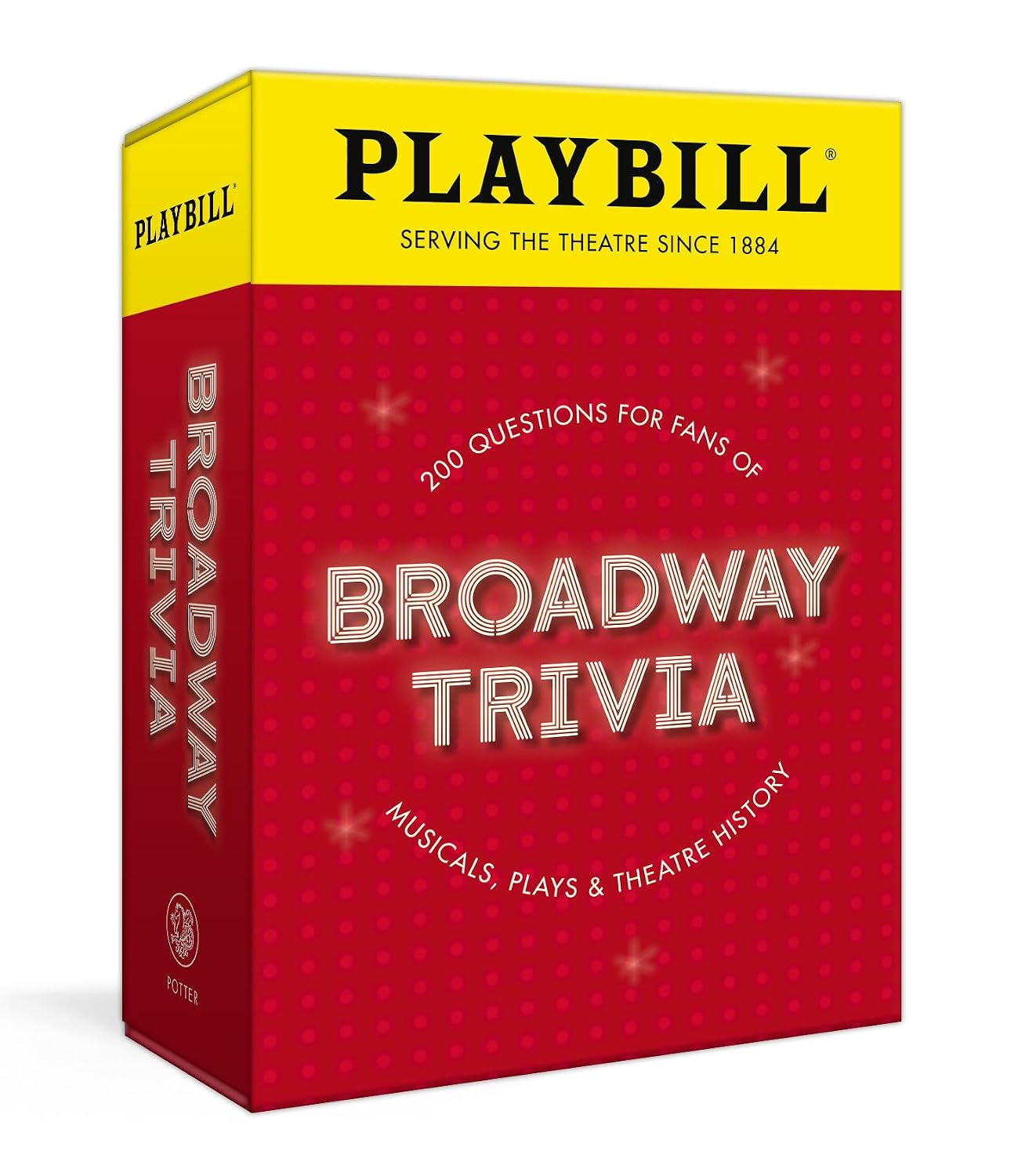
Game
Broadway & Musical Theatre Trivia Game
A trivia game built entirely around Broadway and musical theatre knowledge.
Verified — real listing, active link
Amazon
Check PriceMost people think they already know what "Broadway" means. It's musical theatre in New York — big stages, bright marquees, the kind of show your cousin saw on a trip and hasn't stopped talking about since. That answer isn't wrong, exactly. It's just much less precise than it feels.
"Broadway" is doing at least four different jobs at once. It names a street. It names a theatre district built around that street. It names a specific industry designation for professional theatre that most buildings in that district don't actually belong to. And it names a cultural shorthand people use for musical theatre in general, whether or not the show they mean ever played anywhere near Times Square. None of these four meanings is the "real" one. They overlap, they get used interchangeably in casual conversation, and understanding where they actually diverge is what makes the rest of the Broadway experience — buying tickets, understanding a Playbill credit, knowing why one show is "Broadway" and another isn't — make sense.
At its narrowest and most technical, Broadway refers to a specific classification of professional theatre in Manhattan, applied to a defined group of venues and governed by industry organizations and union contracts rather than by geography alone. At its broadest, it's a cultural label for a certain scale and standard of musical theatre production, one that gets applied loosely by audiences to shows, performers, and even a general aesthetic that has never technically played a Broadway house.
Both uses are legitimate. They're just answering different questions. The technical definition matters if you're trying to understand what makes one theatre "Broadway" and another, a few blocks away, "not Broadway" despite looking similarly grand from the sidewalk. The cultural definition matters if you're trying to understand why someone can describe a touring production in Chicago as "seeing Broadway" without being technically correct — and without anyone in the conversation particularly caring.
Broadway the street runs the length of Manhattan, well beyond any theatre. Broadway the theatre district is a much smaller area, roughly clustered around Times Square in Midtown — and here's the detail that surprises a lot of first-time visitors: most Broadway theatres aren't actually on Broadway the street. They're on the cross streets — West 44th, 45th, 47th, and nearby blocks — with only a handful of buildings that happen to face Broadway itself.
The name stuck for historical reasons, not architectural ones. As the theatre district took shape in the early 1900s, Broadway was the major thoroughfare running through the area, and the name attached itself to the district as a whole rather than to any one building's actual address. By the time the classification hardened into something more formal, the geography had already been settled by habit. So "Broadway" describes a neighborhood-scale district and, within it, a specific set of designated Broadway theatres — not a literal street address requirement.
This is the part most casual explanations get wrong by oversimplifying. There isn't one single rule — it's a combination of factors that have to line up together, and the actual designation is made by the Broadway League, the trade association of Broadway producers and theatre owners, not by any government body or fixed universal formula.
The factors generally involved include:
That combination is why the classification can feel slightly arbitrary from the outside even though it isn't random: it's genuinely multi-factor, and no single element on its own settles the question.
The three categories are often described casually as a quality ladder — Broadway is "the big leagues," Off-Broadway is "smaller," Off-Off-Broadway is "starting out." That framing misses the actual point of the distinction, which is structural, not evaluative. Plenty of ambitious, polished, critically important work happens Off-Broadway and Off-Off-Broadway on purpose, not as a stepping stone.
| | Typical seating | Governed by | Character |
|---|---|---|---|
| Broadway | 500+ seats | Broadway-tier Actors' Equity contracts, Broadway League recognition | Large-scale commercial productions, the highest visibility tier |
| Off-Broadway | Roughly 100–499 seats | Separate, smaller-scale Equity agreements (with several tiers based on size) | Professional, often more experimental or intimate work; a genuine commercial and artistic category in its own right |
| Off-Off-Broadway | Generally under 100 seats | Little to no Equity contract coverage | Experimental, showcase, and developmental work; the least commercially structured tier |
Seating capacity is an important, citable part of the distinction, because it's tied to actual union agreements rather than to anyone's opinion of a show's ambition — but, as the multi-factor classification described above makes clear, capacity alone isn't the entire basis of Broadway status. What the numbers are not is a ranking of artistic merit. A show can be Off-Broadway because that's the right scale and structure for what it's trying to do, not because it failed to be something bigger.
The theatre district's location wasn't planned so much as it drifted there. In the early 1900s, theatres began relocating uptown from Union Square and Madison Square, chasing cheaper real estate. Two of the district's earliest theatres, the New Amsterdam and the Lyceum, opened in 1903, and the following year the newly built subway placed a major station at what had just been renamed Times Square (previously Longacre Square) — giving the area a practical, everyday reason to become a destination rather than a detour. As more theatres clustered into the blocks between 40th and 53rd Streets in the years that followed, the area's bright electric signage earned Broadway its enduring nickname, "The Great White Way."
That's a story about infrastructure and real estate as much as it's a story about art — which is worth sitting with, because it complicates the tempting idea that Broadway became important purely because the work being done there was better than anywhere else. Concentration matters on its own: once enough theatres, performers, producers, and audiences were in one walkable district, the district itself became a self-reinforcing center of gravity, attracting more of all four. Cultural importance and geographic convenience built each other up over decades, not overnight and not for one clean reason.
Scale is the most visible difference, but not the only one. A Broadway production typically operates within a larger commercial structure than most Off-Broadway or regional work: bigger budgets, larger creative and production teams, union contracts that cover a wider range of crew and performer roles, and a commercial model built around sustained, open-ended runs rather than a fixed, short engagement.
None of that is a claim that Broadway work is automatically better-crafted than what happens on smaller stages — plenty of extraordinary theatre exists entirely outside the Broadway classification, and plenty of Broadway productions have closed quickly without finding an audience. What Broadway's scale does reliably deliver is a different kind of production ecosystem: larger orchestras where the material calls for one, more elaborate technical and physical production, and a commercial apparatus — marketing, ticketing infrastructure, awards visibility — built for reaching a wide, ongoing audience rather than a fixed, limited one.
Not automatically, and the distinctions here trip people up constantly. A show can:
A musical can be genuinely famous, commercially successful, and artistically significant while only briefly — or never — actually running in a Broadway theatre under a Broadway contract. Familiarity and Broadway status are correlated, not identical.
Language does this constantly: a specific, prestigious example of a category becomes the name people reach for to describe the whole category. "Broadway" has become that word for musical theatre generally, the way people say they're going to "Google" something regardless of which search engine they actually open.
That's not really a mistake so much as it's the natural outcome of Broadway's position at the top of the industry's visibility — the Tony Awards, national tours, and most large-scale marketing all trace back to Broadway even when the actual performance someone attends doesn't meet the technical definition. The looseness of everyday usage and the precision of the industry definition aren't in conflict; they're just serving different purposes, one conversational and one contractual.
None of this changes what actually matters on the night you're sitting in a seat: the show, the performances, the room. But knowing the difference does change how you plan and how you talk about it. It's the difference between confidently knowing a specific theatre and production are Broadway-classified — which shapes what you can expect from scale, ticketing, and venue — and knowing you're seeing a touring or licensed version of a show that started there, which is a different, still worthwhile, but structurally different experience.
If you're weighing the practical side of an actual trip — geography, tickets, timing, what to expect once you're in your seat — that's exactly the ground Planning a Broadway Trip to New York covers in more detail. This piece is about what the word means; that one is about what to do with the knowledge once you're standing in the Theatre District deciding where to go.
Broadway isn't a single thing pretending to be four. It's a street that lent its name to a district, a district that formalized into an industry designation, a designation that anchors a specific production ecosystem, and an ecosystem successful enough that its name became the word people reach for to describe an entire art form, technically accurate or not.
Understanding where those four meanings actually split apart doesn't make Broadway smaller or less exciting. If anything, it makes the whole picture more interesting: a night at a Broadway show is the product of a real estate migration, a subway stop, a set of union contracts, and a hundred-plus years of a neighborhood building its own gravity — all of it still running, eight times a week, a few blocks from where it started.
Some links in this guide may be affiliate links. See our affiliate disclosure.
A trivia game built entirely around Broadway and musical theatre knowledge.
Verified — real listing, active link
A biography spotlighting a notable figure from Broadway history.
Verified — real listing, active link
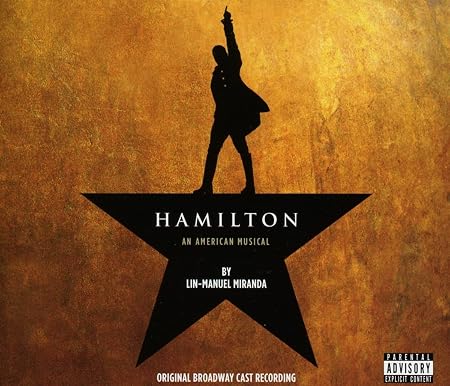
A physical CD cast recording for fans who prefer owning music outright.
Verified — real listing, active link
A comfortable hoodie for theatre fans who want something cozy to wear to rehearsal or the show.
Verified — real listing, active link