Game
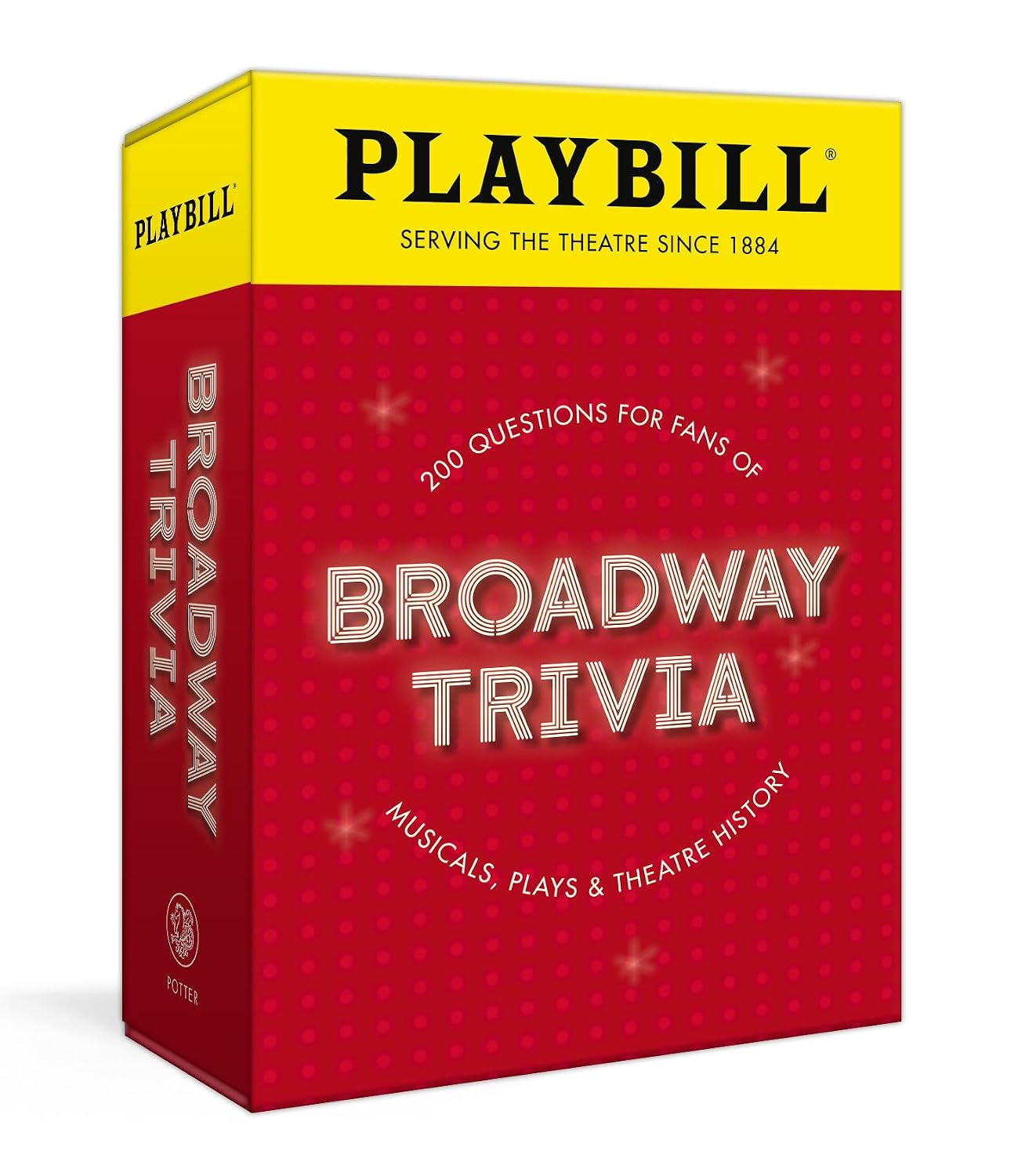
Broadway & Musical Theatre Trivia Game
A trivia game built entirely around Broadway and musical theatre knowledge.
Verified — real listing, active link
Amazon
Check Price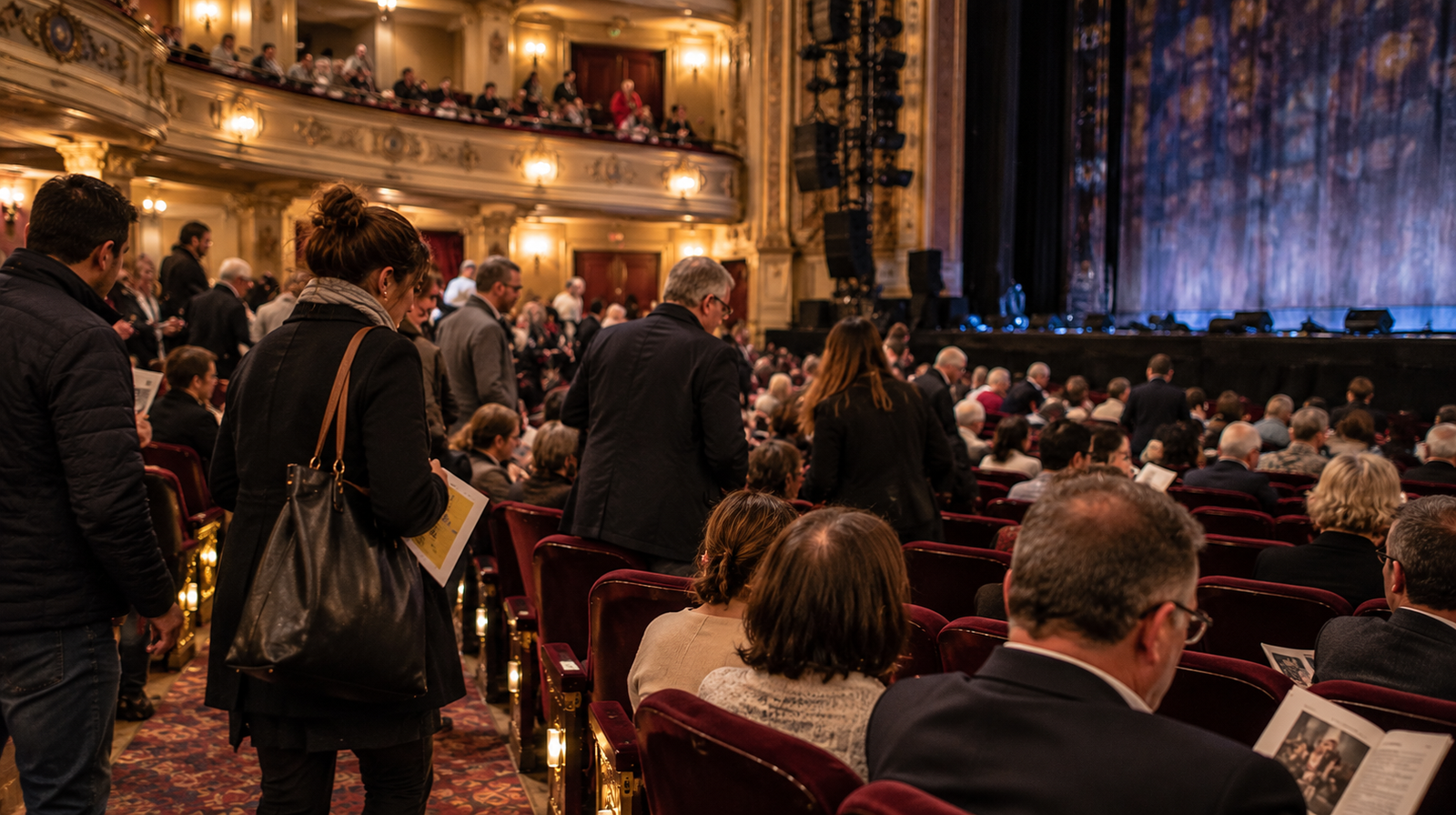
Broadway Guides
Every Broadway theatre runs on the same unwritten contract: for two and a half hours, a room full of strangers agrees to sit still, stay quiet, and let a small group of people onstage pretend something is happening for the first time. Most of what counts as "theatre etiquette" is really just the practical maintenance of that agreement, not a set of arbitrary manners rules. Knowing it in advance means spending less energy worrying about doing something wrong and more energy actually watching the show.
Broadway etiquette is the set of shared expectations that let a live performance function for everyone in the room at once: the audience, the cast, and the crew running the show from the wings. Some of it is genuine house policy, enforced by ushers and printed on the ticket. Some of it is a strong cultural norm that nobody will stop you from breaking, but that will visibly mark you as new to the room if you do. The distinction matters, because treating every norm as a hard rule makes people anxious for no reason, while treating every rule as optional norm gets people removed from a $200 seat. Some of this also follows directly from what a Broadway theatre actually is: a specific, unionized commercial venue with its own contracts and conventions, not just a generic auditorium.
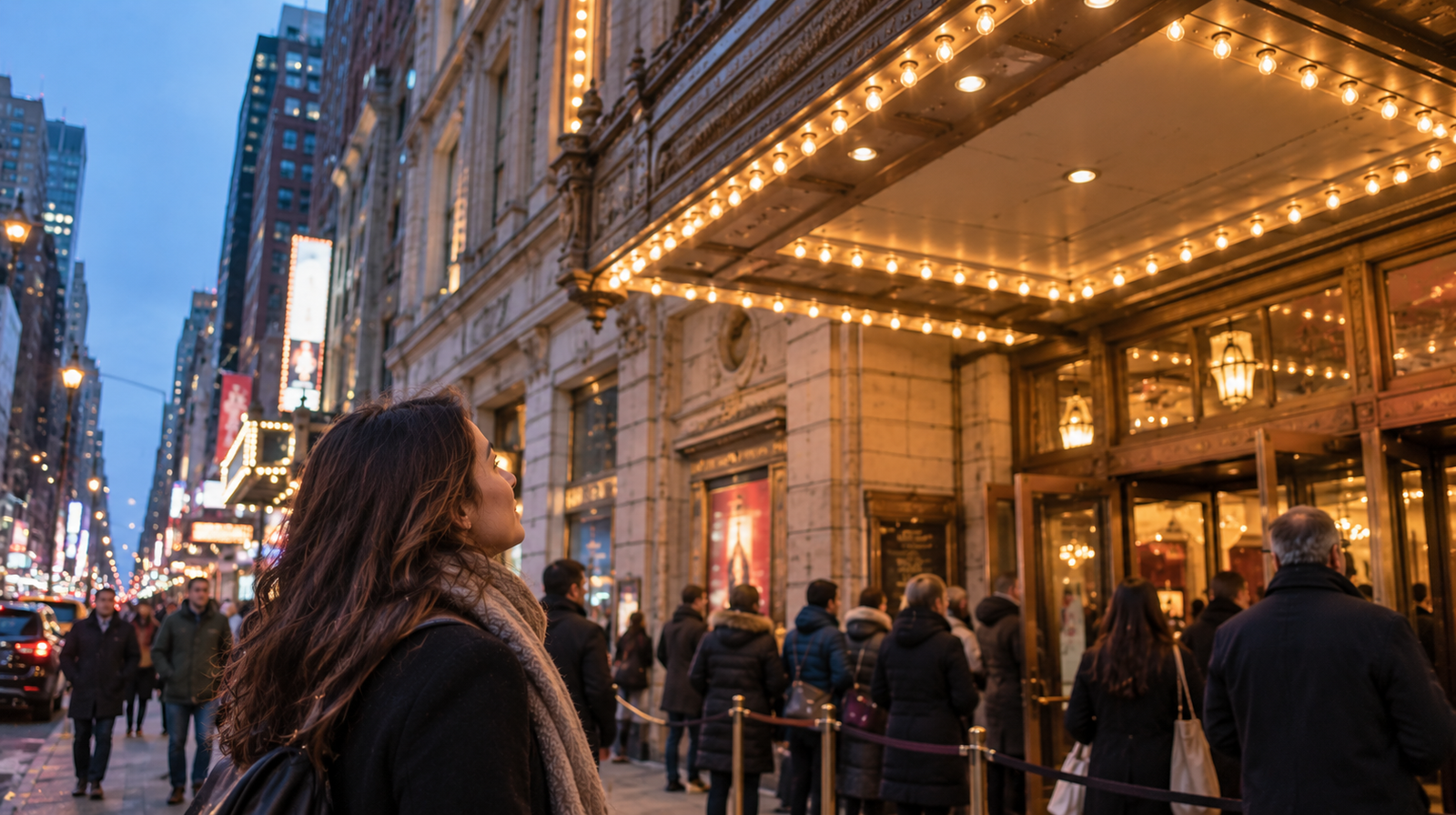
Arriving thirty to forty-five minutes before curtain gives most first-time visitors a comfortable buffer, though there is no single official arrival time that applies to every theatre. That window covers the walk from the sidewalk through security and ticket scanning, a stop at will-call if needed, and time to find your seat without climbing over people who are already seated. Broadway theatres are older buildings, and lines at the door can move slowly during peak tourist periods, particularly on weekend evenings, which is worth knowing on top of the basics of how ticketing itself actually works.
Curtain times are enforced strictly. Broadway shows start on time far more often than they start late, and the house lights dim on schedule whether or not every ticketed seat is filled. Building a buffer into your evening, especially if dinner or transportation is involved, matters more on Broadway than it does at most other live events. Anyone still working out the rest of an evening around a show benefits from planning the fuller trip in advance, since that is really its own separate problem from the etiquette of the show itself.
There is no enforced dress code at Broadway theatres today, and this is one of the etiquette questions people worry about far more than they need to. Jeans, sneakers, and a nice top are completely normal. So is dressing up, particularly for an opening night or a special occasion. Most audiences on any given night are a genuine mix of both, and nobody is seated differently for one choice over the other.
What matters more than formality is comfort: Broadway seats were not designed with modern legroom expectations, and a long coat or bulky layers become a genuine inconvenience once you are folded into a row for two and a half hours. Some theatres have limited or no coat check, which is worth factoring in during colder months, since a heavy coat often ends up folded on your own lap rather than checked at the door.
No. Phones should be put away and not used once the performance begins, and this is the piece of etiquette Broadway treats most seriously, even though the exact mechanics differ from show to show. As a baseline expectation, that means off or fully silenced rather than left on vibrate, since a lit screen in a dark theatre is visible to everyone behind you and a vibrating phone can still be audible in a quiet house. Most Broadway theatres play some form of pre-show announcement addressing phone use, and ushers will generally ask a patron to put a phone away if it comes out during the performance, though the exact wording and enforcement style is set by each production rather than being identical house to house.
A small number of productions have gone further, requiring phones to be sealed inside lockable pouches for the length of the show. That response tracks a broader shift in how seriously the industry treats audience phone use: a handful of viral disruptions in recent years, where a phone-related incident during a performance became national entertainment news rather than a quiet in-house matter, turned what used to be framed as an old-fashioned complaint about manners into an actively discussed policy question across Broadway. The specific enforcement method varies by production, but the underlying expectation does not: the phone stays away and dark until the curtain call.
Recording or photographing the performance itself is not allowed once the show is underway. This is not simply a matter of house preference: unauthorized recording during a Broadway show also runs against the terms performers and creative teams work under, which is a large part of why the rule holds across theatres rather than varying much in practice. Photography of the auditorium, rather than the stage, is generally tolerated before the show and during intermission, though exactly what is allowed can still depend on the specific production and the ushers on duty, so "no photos of the stage, ask before anything else" is a safer default than assuming one fixed policy everywhere. A handful of productions build an exception into a specific number, inviting the audience to record that particular moment, but that is the show explicitly opting in for one instance, not a general audience right.
Arrive after curtain and you should expect to be held near the back of the house rather than walked straight to your seat, though the exact practice varies by theatre and by production. House managers generally seat latecomers at an appropriate break in the action rather than mid-scene; for some shows that break is intermission, while others build in an earlier pause where a handful of seats can be reached without disrupting the performance. For shows without an intermission, a late arrival can sometimes mean waiting outside the auditorium until the show ends. None of this is punitive. It exists because walking a stranger down a dark aisle mid-scene disrupts everyone else in the room, cast included, and the specific policy for a given show is generally posted or explained at the theatre itself.
Most Broadway theatres do not allow outside food or drink inside the auditorium, and staff can ask you to finish or dispose of something before you go in, though the fine points of the policy, including exceptions like sealed water bottles, are set by each venue rather than being identical across every house. What is generally fine is anything purchased at the theatre's own bar or concession stand, since a growing number of Broadway houses now sell drinks that can be carried to your seat in a covered cup, along with snacks meant to be eaten quietly. The practical guidance holds up well regardless of the exact venue policy: assume the theatre's own concessions are fair game and treat everything else as something to finish before you go in.
Applause after a musical number, a strong entrance from a lead performer, and the curtain call is completely normal and expected on Broadway, unlike the stricter silence some audiences observe at classical concerts. Where Broadway etiquette gets more debated is the standing ovation, which has become close to automatic at the end of almost every show regardless of how the audience actually felt about it. There is no obligation to stand simply because the people around you are standing. Staying seated for a curtain call you found merely fine, rather than joining an ovation out of social pressure, is not rude. It just makes the gesture mean something again for the performances that actually earn it.
Talking during the performance, even in a whisper, carries further than people expect in a quiet house, and it is one of the more common sources of friction between audience members. Save questions and reactions for intermission or the walk out afterward. Singing along, mouthing lyrics, or providing your own commentary on a scene falls into the same category: harmless to you, audible to several rows around you.
Every person seated in a Broadway theatre needs a ticket, regardless of age; there is no lap-child exception the way there sometimes is at other kinds of live events. What varies is the age guidance beyond that baseline: individual productions and theatres set their own recommended age based on content, length, and volume, and that recommendation is not the same number show to show. A family-oriented adaptation of an animated film and a serious drama running close to three hours may both be technically open to a similar range of ages, but only one of them is actually built with a young audience's attention span in mind, which is exactly why the specific show's own guidance matters more than any general rule of thumb.
Checking a specific show's official age guidance before booking, rather than assuming a musical is automatically family-friendly, saves an uncomfortable walkout partway through the first act. It is also worth preparing a young child for the specific etiquette of the room itself: sitting still for a long stretch, staying quiet between songs, and understanding that leaving mid-scene to use the bathroom is a real disruption in a way it simply is not at a movie theatre.
Intermissions are usually short, commonly somewhere in the range of fifteen minutes though the exact length is set by each production, and most of the audience has the same idea at once: bathroom, bar, or both. Deciding in advance which one matters more to you, and moving toward it promptly when the lights come up, beats standing in the aisle trying to choose. It is also worth returning to your seat a few minutes before the announced end of intermission rather than at the literal buzzer, since a full house settling back in takes longer than it feels like it should from the lobby.
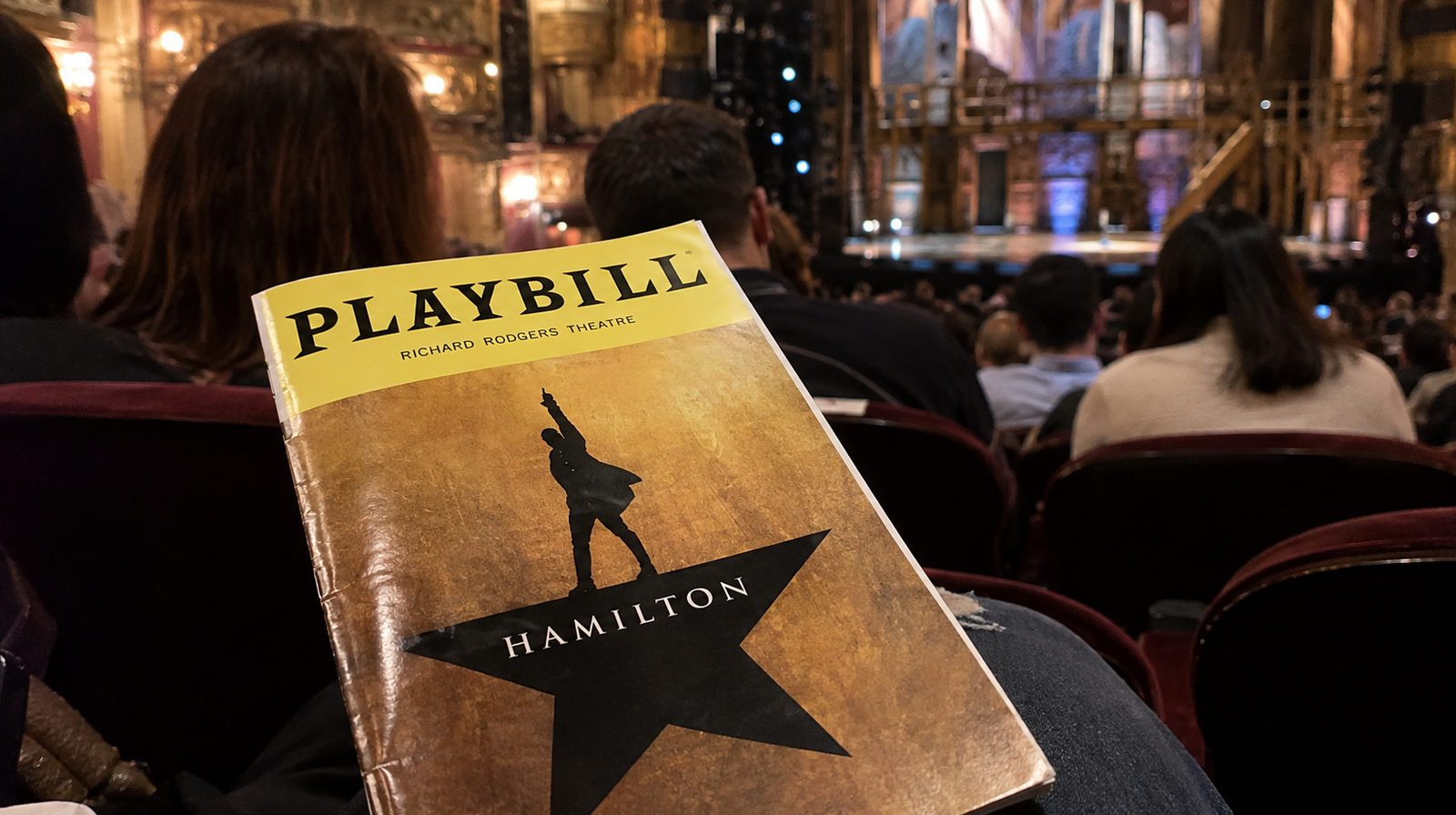
Once the curtain call ends, the etiquette shifts from the auditorium to the sidewalk. Many Broadway performers exit through a stage door after the show, and a crowd of fans often gathers there hoping for an autograph or a photo, frequently signing the Playbill audience members already have in hand rather than anything bought specifically for the occasion. Stage-dooring is a real, well-established part of Broadway culture, but experiences vary considerably by production, night, and performer: some performers stop to sign or take photos, others leave without stopping, and there is no guarantee attached to standing outside the door. Waits can run from a few minutes to well beyond that, and it is common, though not universal, for crew and ensemble members to emerge before the leads. Performers are never obligated to stop, and a line that stays orderly and patient is simply a more pleasant experience for everyone in it, whether or not a given performer stops that night.
Almost everything above collapses into one working principle: act as though the person next to you paid exactly as much as you did to be fully present for this specific performance, because they almost certainly did. Phones away, food outside unless it came from the theatre, quiet during the show, patience with latecomers and ovations alike. Everything else, from what you wear to whether you join the standing ovation, is genuinely up to you.
None of this is complicated once it is laid out, which is really the point. Broadway etiquette is not a secret code designed to expose tourists, and getting one detail wrong will not ruin an evening. It is a short, practical list built around a single shared goal: making sure a live performance, happening once, in real time, in front of everyone in that room, actually gets the attention it was built for. Anyone walking in with that much in mind has already gotten the etiquette right before the house lights go down.
Some links in this guide may be affiliate links. See our affiliate disclosure.
A trivia game built entirely around Broadway and musical theatre knowledge.
Verified — real listing, active link
A biography spotlighting a notable figure from Broadway history.
Verified — real listing, active link
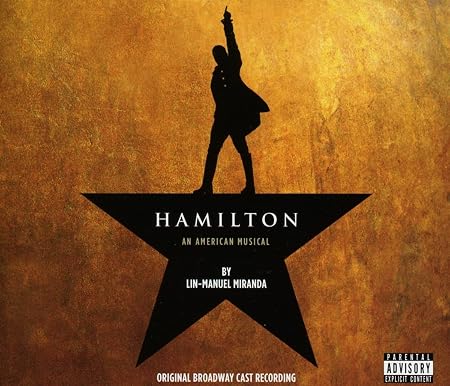
A physical CD cast recording for fans who prefer owning music outright.
Verified — real listing, active link
A comfortable hoodie for theatre fans who want something cozy to wear to rehearsal or the show.
Verified — real listing, active link
There's no single right way to buy a Broadway ticket. This guide breaks down the official routes — box office, rush, lottery, and resale — so you can choose based on your own priorities, not guesswork.
Handed out free at nearly every Broadway theatre, the Playbill has quietly become one of the most collected objects in American theatre. A look at where it came from, what separates it from a paid souvenir program, and what actually makes one worth keeping.
Broadway means more than musicals in New York. Here's what actually makes a theatre, a show, or a night out officially Broadway.