Game
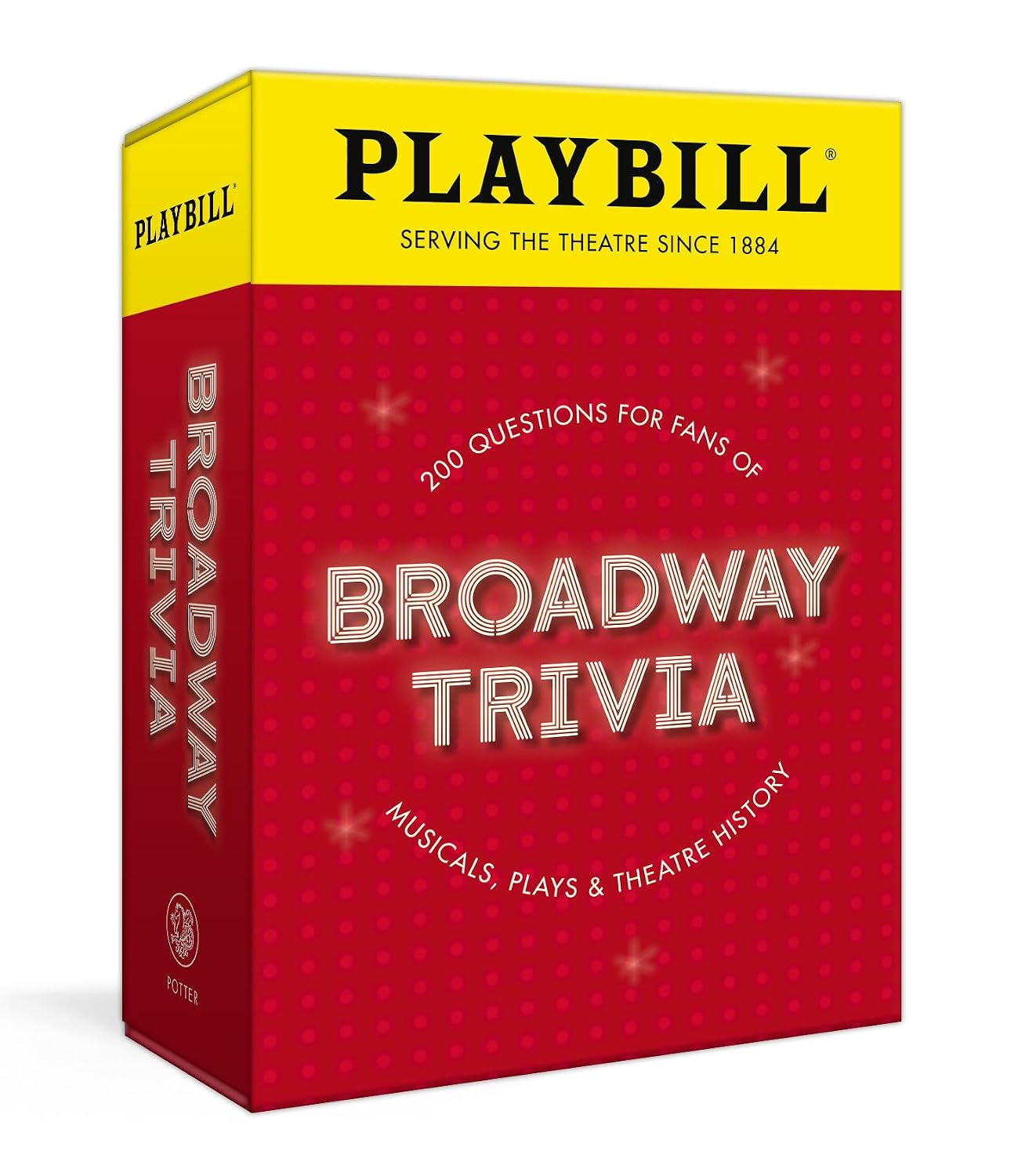
Broadway & Musical Theatre Trivia Game
A trivia game built entirely around Broadway and musical theatre knowledge.
Verified — real listing, active link
Amazon
Check Price
Broadway Guides
"Revival" sounds like it should mean the simplest thing in the world: an old show, performed again. What the word actually points to on Broadway is more specific than that. A revival is a new Broadway production of a work that has appeared on Broadway before, built by a new creative team who have to decide, deliberately, what to keep from the version audiences already know and what to change. That decision is where a revival becomes interesting, whether the answer turns out to be "almost everything" or "almost nothing."
A Broadway revival is a subsequent Broadway production of a show that has previously run on Broadway, staged with its own creative approach rather than simply reopening the earlier run. The underlying material, the script, the score, the basic story, stays the same. What changes is the production: the specific director, choreographer, designers, and cast assembled to bring that material to the stage again.
That distinction between the work and the production matters more than it sounds like it should. Guys and Dolls the show has existed continuously since 1950. Guys and Dolls the Broadway production has been mounted several separate times, each one a distinct creative undertaking with its own director, its own design language, and its own cast making its own choices about who these characters are. A revival is one of those later productions, not the ongoing existence of the title itself.
An original Broadway production is the first time a given work appears on Broadway. Everything about it, the direction, the choreography, the sets, the orchestrations, the specific performances, is being invented for that show for the first time. There is no earlier Broadway version to consult, borrow from, or react against.
A revival is, by definition, not that. It arrives with a Broadway history already attached to the material, which changes the job facing its creative team. They are not asking "how should this story be told for the first time." They are asking "what does this specific production have to say about a story Broadway has already told." That is a real creative constraint, but it is not a lesser one, and a revival is not obligated to overhaul everything about the original simply because an earlier version exists. Some revivals change enormously. Others deliberately stay close to what came before.
This is the distinction that gets blurred most often outside the industry, and it is worth being precise about it, largely because the Internet Broadway Database, the standard reference for this kind of Broadway production history, draws the line clearly.
A revival is a subsequent production of a show mounted with a different creative concept, generally under a different creative team. A return engagement is something narrower: a return of a specific earlier production, original or revival, with its direction and designs duplicated rather than reimagined, and frequently much of its cast intact. In practice, a return engagement is closer to the same production coming back for another run than to a new interpretation of the material. A revival, by contrast, is its own production in every meaningful sense, even when it shares a title, a script, and a score with something Broadway has staged before.
The commercial logic is real and worth naming honestly: a title audiences already recognize carries less risk than something entirely new, and that matters in an industry where a new production is a genuinely expensive undertaking. But treating box office as the only reason a show gets revived undersells what actually draws directors, choreographers, and performers back to older material.
A familiar work gives a new creative team something to push against. Directors take on revivals specifically because they believe there is more to find in a script or a score than the original production, or the last revival, managed to surface, whether that means a different emotional emphasis, a different visual world, or a cast whose presence changes what the material means. Revivals also introduce landmark theatrical works to audiences who never had the chance to see them the first time, which is its own kind of preservation: a script sitting in print is not the same as a show experienced live. And changing cultural context genuinely does change how older material reads. A revival staged decades after a show's premiere is inevitably in conversation with everything that has happened to its subject matter, its genre, or its politics since the original opened, whether the production leans into that conversation or tries to sidestep it.
Yes, sometimes substantially, and this is where revivals stop being a scheduling category and start being genuine theatrical events in their own right.
Casting alone can shift what a familiar scene is doing. The 1976 Broadway revival of Guys and Dolls was staged with an entirely Black cast, a choice that recontextualized Frank Loesser's Runyonesque New York without changing a line of the script. Direction and design can do similarly heavy lifting. When Harold Prince directed the 1994 revival of Show Boat, he and choreographer Susan Stroman tightened the book, restored material that had been cut since the original Washington, D.C. tryout, and staged the production's treatment of race and post-slavery America with a directness the 1927 original had not attempted, working from the same Kern and Hammerstein score while asking noticeably more of the audience watching it. Pacing, scenic design, lighting, and choreography can each recalibrate what a familiar moment feels like without altering a word of dialogue or a note of music.
None of that means every reinterpretation improves on what came before, and it would be a mistake to treat "different" as automatically "better." A revival's choices are just that: choices, made by a specific creative team, for a specific production, open to the same disagreement and debate any new work invites.
Chicago is probably the single clearest case of a revival becoming its own landmark. The original 1975 production, choreographed by Bob Fosse, ran a respectable but unspectacular two years. The 1996 revival, staged in a stripped-down, concert-style presentation with the orchestra visible onstage and choreography by Ann Reinking in the style of Fosse, has become the longest-running American musical in Broadway history and the longest-running musical revival on record, second overall only to The Phantom of the Opera, running continuously for decades and outlasting the original by an enormous margin.
Guys and Dolls illustrates how differently a revival can approach the exact same material across multiple productions. Its 1976 all-Black-cast staging, its 1992 production directed by Jerry Zaks with Nathan Lane and Faith Prince, and its 2009 revival each represent a distinct set of choices about tone, design, and casting, built on the identical Frank Loesser score and Abe Burrows and Jo Swerling book.
Show Boat demonstrates a revival actively reckoning with a show's most difficult material rather than smoothing past it. Harold Prince's 1994 production treated the 1927 original's subject matter, race in the post-slavery American South, as something to confront directly rather than soften, using the same Kern and Hammerstein songs to noticeably different effect than the original production had.
The Sound of Music's 1998 Broadway revival, led by Rebecca Luker as Maria, points toward the opposite instinct: a production that largely trusted the material's original shape and stayed close to the tone audiences already associated with the Rodgers and Hammerstein score, rather than pursuing a dramatically new interpretation. Not every revival is trying to reinvent its source; some are making the case that the original approach still works.
The revivals that turn into genuine cultural moments tend to combine several things at once: well-known source material, performers audiences specifically want to see in those roles, a creative approach distinct enough to generate its own conversation, and timing that puts the material in unexpected dialogue with the present. Chicago's 1996 revival benefited from all of these at once, arriving with a leaner, more theatrical staging concept right as its themes of celebrity, scandal, and media spectacle felt freshly relevant. That combination is difficult to engineer on purpose, which is part of why most revivals do solid, respectable business without becoming the kind of event a whole theatre season gets built around, and why the rare revival that does become one is often the hardest ticket in town, worth understanding how Broadway ticketing works well before it opens.
No. A revival can update staging, rethink choreography, shift the visual language of a production, or foreground an interpretation of a character that the original never explored. It can also do very little of that and instead aim to honor an earlier production's approach closely, which is a legitimate creative choice rather than a failure of ambition.
It is worth keeping that possibility separate from a return engagement, which by definition duplicates an earlier production's direction and design rather than reinterpreting them. A revival that stays visually and tonally close to an earlier production is still its own new creative undertaking, built by its own director and design team making their own decisions, even when those decisions land close to where an earlier production already stood. Recreation and reinterpretation sit on a spectrum, not in opposition, and where a given revival falls on that spectrum is itself part of what makes it worth watching.
There is a common assumption that a revival is somehow a lesser creative undertaking than an original production, since it starts from existing material rather than a blank page. That assumption does not hold up against what a revival's creative team actually has to do.
Restaging a show for a new production involves genuine new direction, new choreography, new design, and new performances built from the ground up, even when the underlying script and score remain fixed. The constraint of working with existing material is not the same as an absence of creative work; if anything, finding a genuinely new angle on a story audiences already know can be harder than telling an unfamiliar one, precisely because expectations are already in the room. A revival and a new production are answering different creative questions, not competing on a scale of originality where one starts ahead.
A Broadway revival is a new Broadway production of an existing theatrical work that has previously appeared on Broadway. Its creative team can preserve, reinterpret, or reframe the material for a new production and a new audience, and neither choice is automatically the right one. What makes a revival worth paying attention to is not whether it changes everything or nothing, but whether the specific choices its creative team made actually earn the stage time, in the same way every other piece of what Broadway actually means eventually has to. Understanding that distinction is part of understanding how the American musical has developed as a living form rather than a fixed catalog of finished works, worth carrying into the theatre alongside what to expect once you're in your seat and the Playbill you will likely keep from whichever version you end up seeing.
Some links in this guide may be affiliate links. See our affiliate disclosure.
A trivia game built entirely around Broadway and musical theatre knowledge.
Verified — real listing, active link
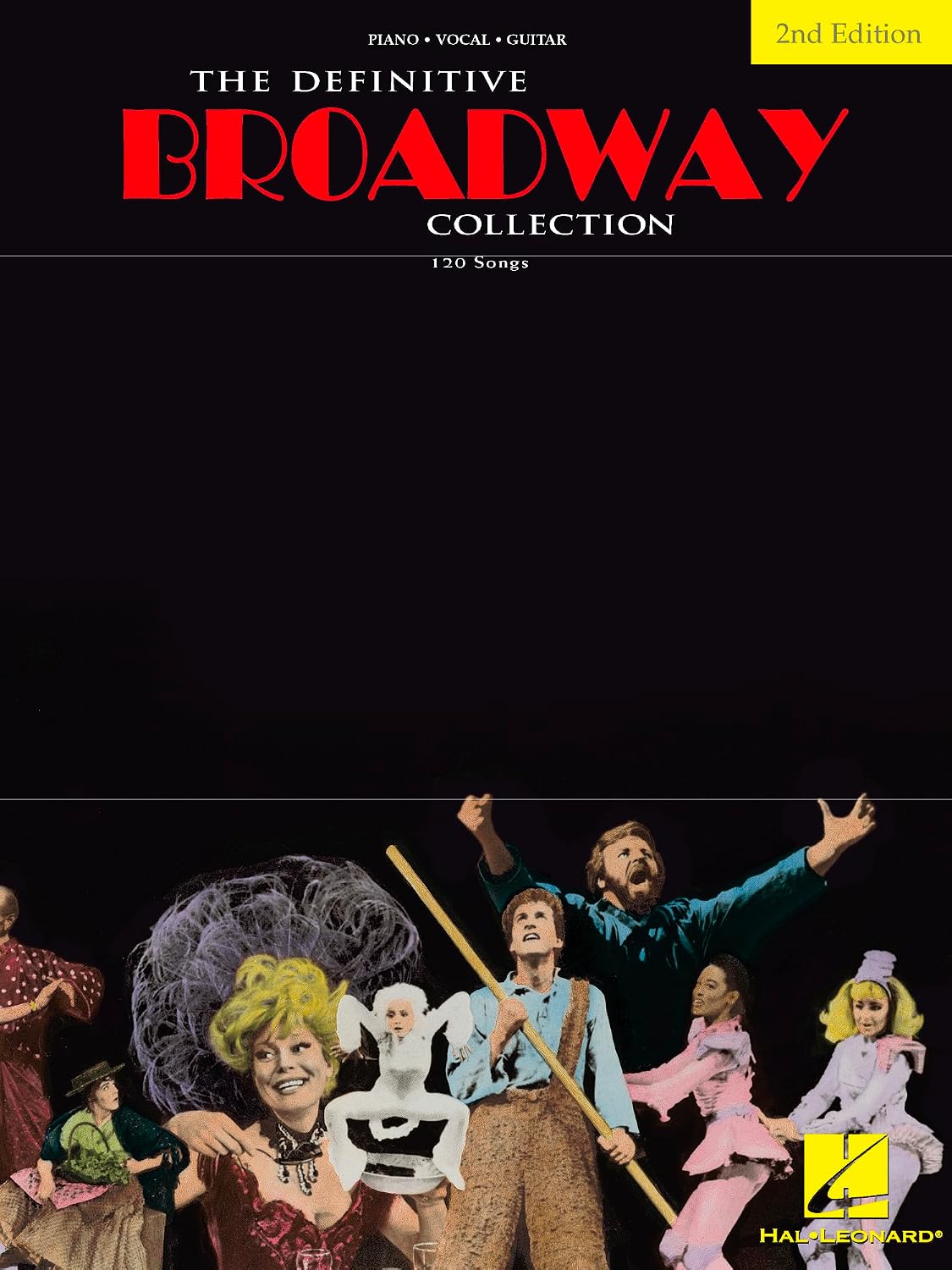
A biography spotlighting a notable figure from Broadway history.
Verified — real listing, active link
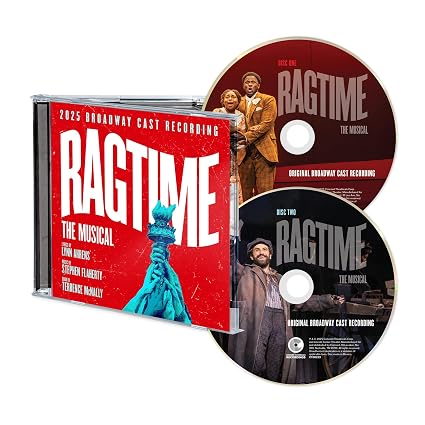
A physical CD cast recording for fans who prefer owning music outright.
Verified — real listing, active link
A comfortable hoodie for theatre fans who want something cozy to wear to rehearsal or the show.
Verified — real listing, active link
Most sources name The Black Crook (1866). Here's why historians still argue, and the other shows that claim to be Broadway's first musical.
A Broadway ticket lists a curtain time, not a full evening. Running times vary by show, structure, and intermission, and the more useful question is how much time to actually set aside around the performance itself.
Broadway and Off-Broadway aren't a ranking of size or quality. They're two distinct, formally defined parts of New York's theatre industry, separated by venue classification and union contracts, not by how ambitious or polished a production happens to be.