What's easy to miss about the three duels in Hamilton is that the show never bothers disguising the fact that it's reusing itself. The same counted paces, the same list of rules, the same rising tension before a shot — restaged twice more after the show has already spent an entire number establishing it the first time. A production this dense with historical incident had every reason to invent three different structures for three different duels. It chose not to, and the choice is worth taking seriously rather than filing under musical-theatre economy — because a structure this specific, reused this deliberately, is usually doing more work than saving the writers a new melody.
The first time, in "Ten Duel Commandments," the show is doing something closer to teaching than staging. Neither Hamilton nor Burr is the one dueling — they stand in as seconds for John Laurens and Charles Lee, after Lee publicly insults George Washington and refuses to apologize for it. The number lays out the actual mechanics of an honor duel: seconds negotiating on each principal's behalf, real chances to reconcile before anyone fires, counted paces, loaded pistols raised only on command. There's a real tension running underneath the procedure, too — Hamilton is visibly the character least interested in following it, impatient with every step that delays the confrontation he's technically only watching, which makes him an odd choice to have absorbed the ritual's rules so completely by the time he needs them himself. Nothing in this first number is really about Hamilton yet. It's about the audience, who is being handed a rulebook it hasn't been told it will need again. The scene ends without a death — "most disputes die and no one shoots," the show tells you directly — and the line does double duty: it's true of this duel, and it's a promise the show is quietly setting up to break.
The audience is being taught the rules.
That promise gets its first real test nearly two hours later, when "Blow Us All Away" reprises the same musical structure for a duel Hamilton didn't ask for and can't stop. His son Philip, nineteen and freshly furious on his father's behalf, challenges George Eacker after Eacker mocks Alexander in public. What's different this time isn't the ritual — it's who's explaining it. Alexander is the one who tells Philip about an option the first duel's rulebook never mentioned: aim the pistol at the sky, deliberately, and give the other man a way to walk off the field with his honor intact and nobody dead. It's a real addition to what the audience already knows, taught inside the story by a father who has clearly used the tactic himself. The staging makes the stakes physical rather than abstract: Philip counts toward the shot the same way the show has trained the audience to expect by now, except this time the counting doesn't finish as a number. It breaks into gunfire before he reaches ten. Eacker doesn't wait for the ritual to run its course. The rulebook the show spent an entire earlier number establishing turns out to only work if both people are actually following it — and the show lets that discovery cost a nineteen-year-old his life, on stage, in real time, rather than reporting it after the fact.
A choice has been made that should let the other person live.
Nothing about that memory gets refreshed for the audience before the final duel arrives. There's no reprise of "Blow Us All Away" to remind anyone what happened the last time this exact gesture was tried, no lyric that says, in effect, "remember Philip." The show simply trusts that an audience which sat through Philip's death an act ago is still carrying it, unassisted, into a completely different scene. That's a real bet on the audience's own memory doing structural work the script never states outright — the kind of trust a show can only extend to a device it has already used once before, successfully, in the same production.
There's a smaller, quieter piece of invention sitting inside that first duel worth naming honestly, because of what it says about how the show handles its own history. Burr is staged as Charles Lee's second in "Ten Duel Commandments" — a real dramatic role with real lines, standing opposite Hamilton in the ritual the whole show will later depend on. In the actual historical record, that job belonged to Major Evan Edwards, not Burr. It's a minor substitution next to everything else Hamilton reshuffles about its own past, but it's the same instinct at work everywhere else the show simplifies its cast of characters to keep its central relationships legible — an instinct the same instinct this site has already traced through Hamilton's bigger historical omissions, where the same pattern shows up at much higher stakes than a stage role assignment.
By the time "The World Was Wide Enough" arrives, the show has stopped calling this structure by its original name. Burr doesn't recite the Ten Duel Commandments. He counts off "ten things you need to know" instead — his own list, in his own voice, describing exactly what he's watching Hamilton do on the dueling ground: putting on his glasses, testing his footing, sighting down the barrel. It reads like procedure, the same way the first duel's commandments read like procedure, but the function has changed completely. Burr isn't teaching an audience the rules anymore. He's building a case, in real time, for why he's about to fire on a man he has genuine reason to respect — noticing every detail that could be read as Hamilton preparing to kill him, whether or not that's actually true. The counted ritual that once belonged to the audience now belongs entirely to one increasingly frightened man, narrating his own justification to himself as much as to anyone watching.
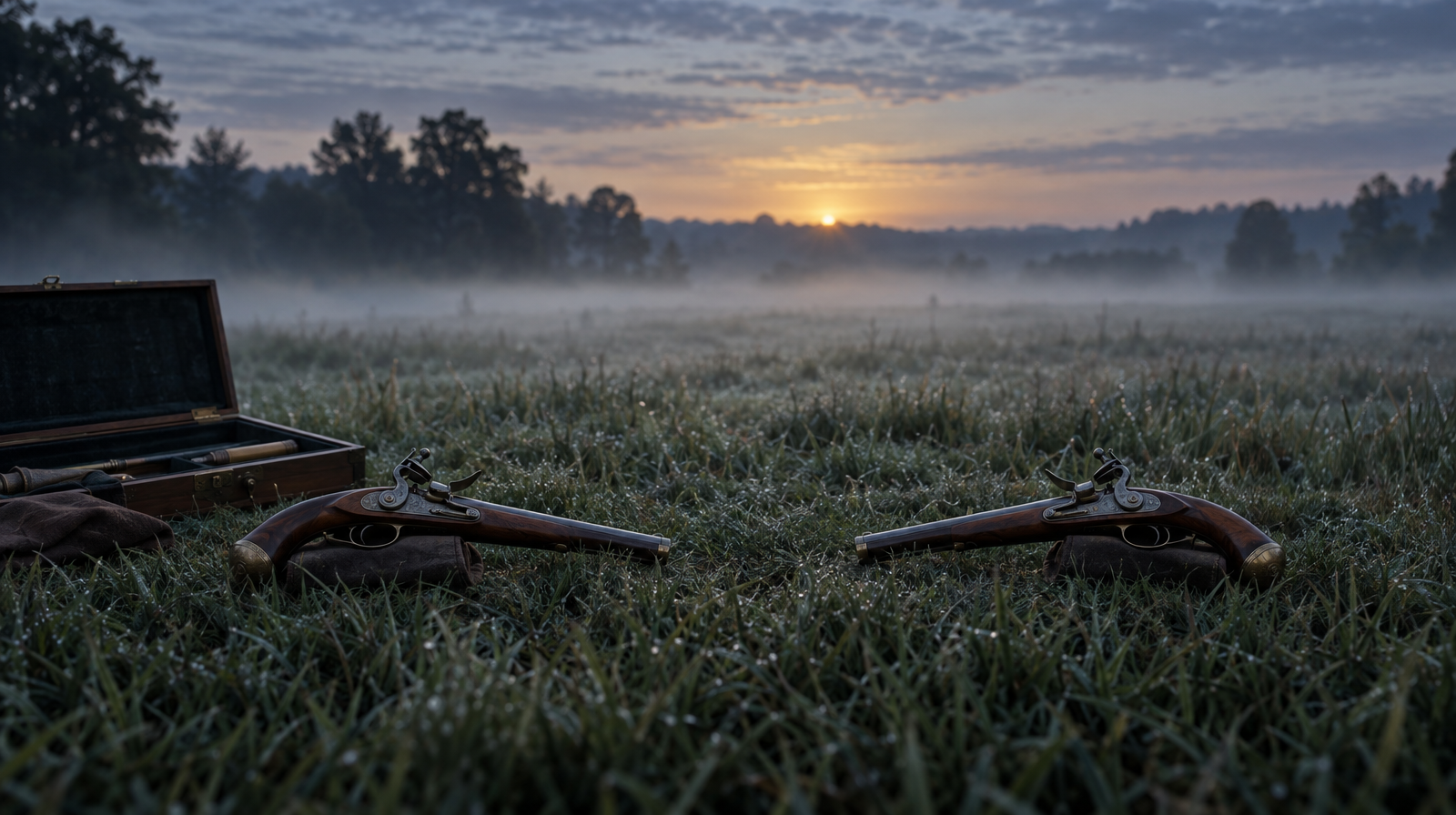
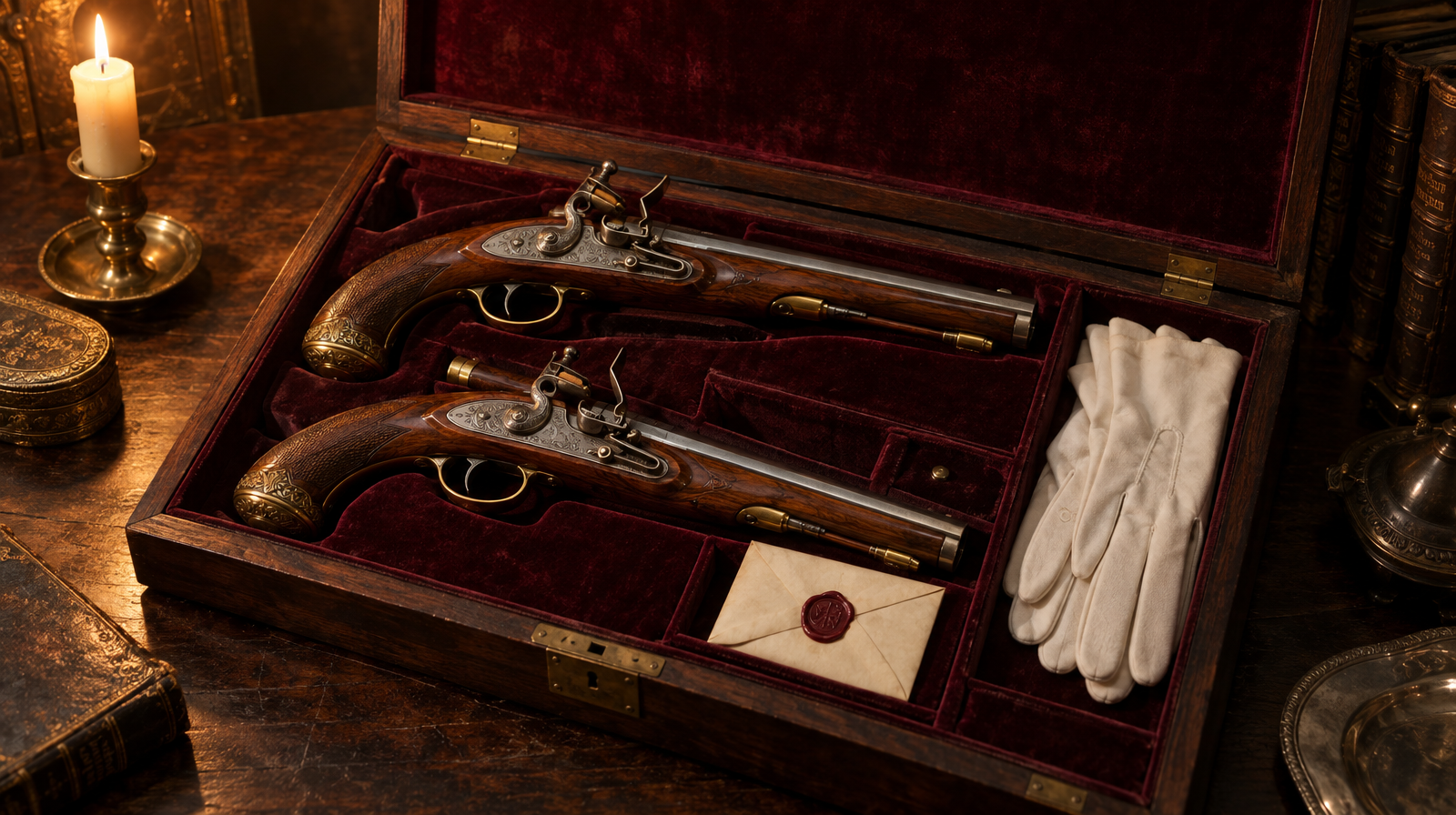
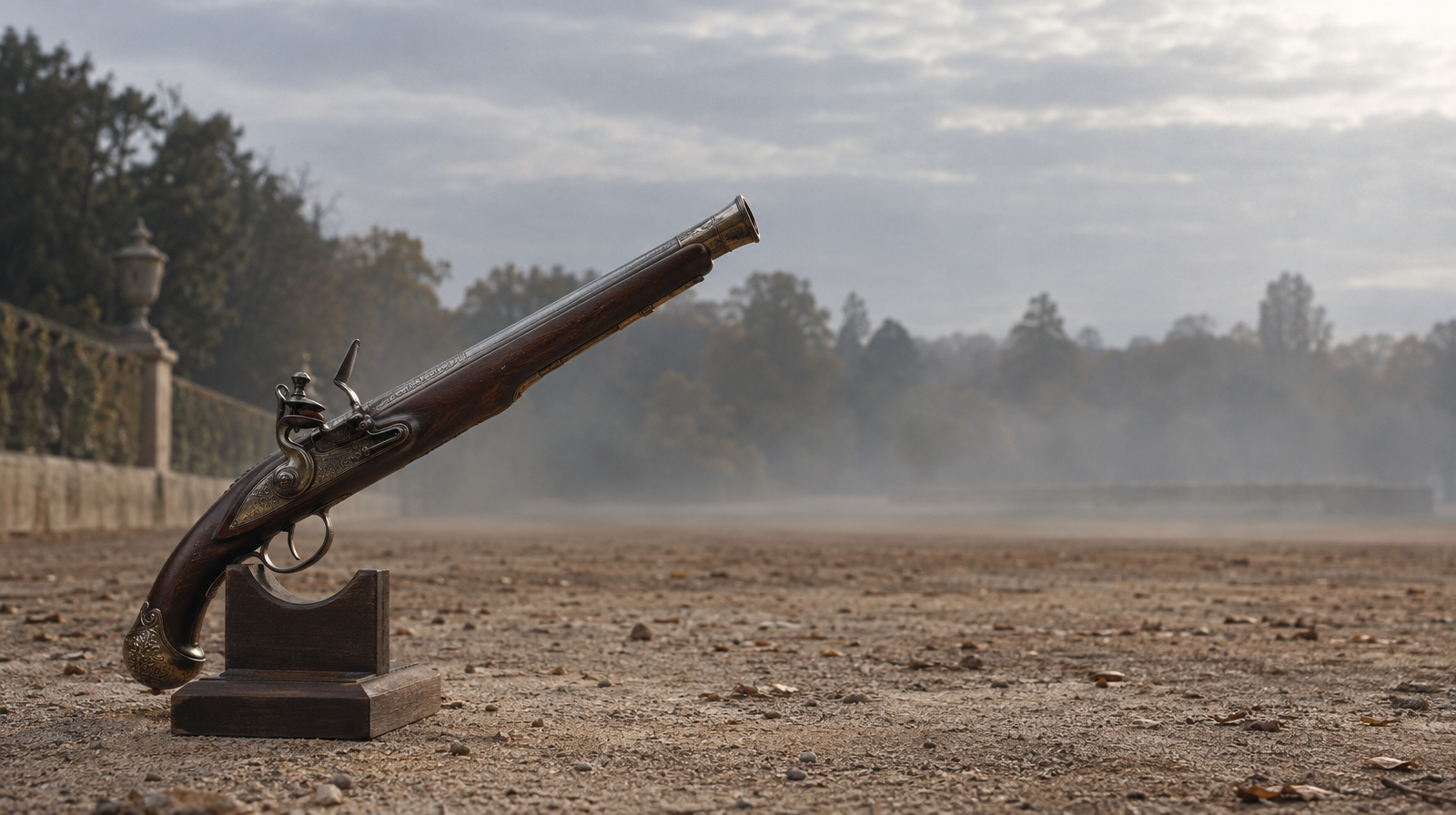
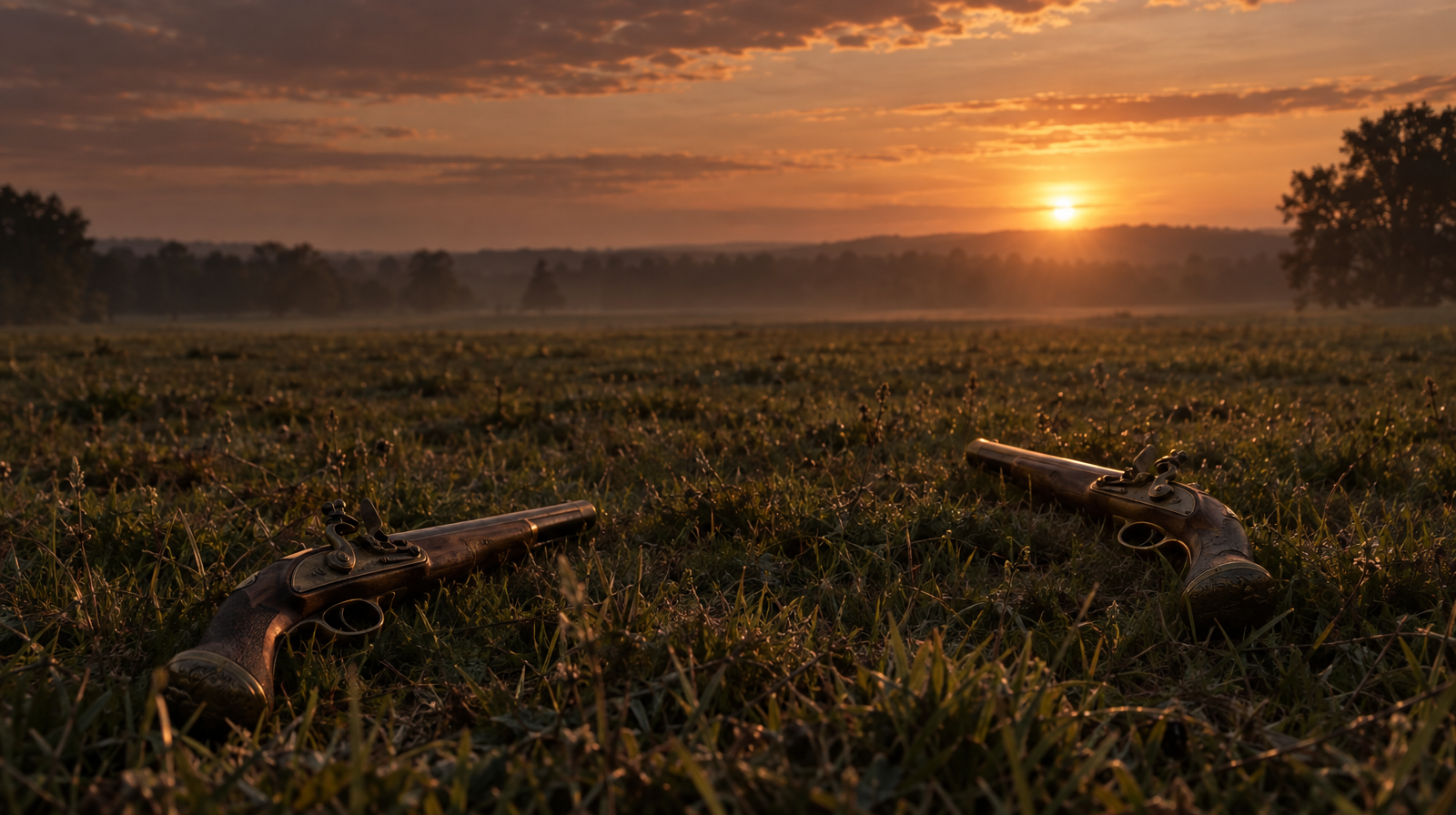
The staging pushes the repetition even further, and it does so unevenly on purpose. Philip's death arrives fast — the counting breaks into a gunshot and the scene is over almost before the audience can process what just happened, which is its own kind of cruelty. Hamilton's does the opposite. As the actual shots approach, the show reportedly runs the count backward, rewinding the moment so the audience can sit inside Hamilton's own reflection before the shot lands rather than simply watching it happen — a device the first two duels never used, because neither one needed to slow down what the audience hadn't already learned to dread. Philip never gets that pause. Hamilton does, and the imbalance is itself an argument: the show reserves its most extended interior moment for the death that closes out its own title character's story, not the one that arguably breaks him first. And then Hamilton raises his pistol toward the sky. It is, structurally, the exact gesture Philip made. The audience has already watched this specific choice fail once, on this same ground, with pistols by several accounts drawn from the same case Hamilton had lent his son three years earlier. That's what makes the moment land the way it does — not surprise, because nothing about a skyward pistol is surprising to an audience that has already sat through what happened the last time someone tried it. It's dread, specifically, and dread is a different feeling from sadness or shock: it's the particular discomfort of watching someone you like walk toward an outcome you already have evidence for, unable to warn them, because the character on stage doesn't have access to the audience's memory of scene two. Burr fires anyway. The show has spent two entire duels building a very specific, trained hope in its audience, and it spends that hope here, deliberately, rather than surprising anyone with an outcome nobody saw coming.
The audience recognizes the pattern before the character can escape it.
That's the real function of returning to this structure three times, and it's a genuine trade-off worth naming rather than treating as an obvious win. A version of Hamilton that gave its final duel a wholly new musical language would have kept the ending less predictable in the moment — a real cost, since surprise is its own kind of theatrical power, and plenty of stage deaths rely on exactly that. What this version buys instead is recognition: an audience that has already done the emotional work of learning what this ritual costs doesn't need the show to explain the danger a third time. It already knows, the way you know a pattern once you've seen it complete itself badly one time before. The repetition trades the shock of the unfamiliar for the much heavier weight of watching something you recognize happen anyway, to someone who should have been the one person on that field who understood exactly what he was risking, because he's the one who taught it to his own son.
It's worth noticing what this does to a second viewing, too, because the mechanism only works one way the first time through. Someone watching Hamilton again already has all three duels sitting in memory before the show even reaches "Ten Duel Commandments" the first time. For that audience, the earlier teaching scene can't function as pure instruction anymore — it's already shadowed by what the rulebook will fail to prevent, twice, later that same night. The show doesn't change a word for a returning audience, but the structure quietly does different work for them regardless: dread arrives on the first duel instead of waiting for the third, because the memory the show spent two acts building the first time is now something a repeat viewer brings in with them from the start.
Go back to that line from the very first duel — most disputes die and no one shoots — and it reads differently once you've sat through all three. It wasn't a fact about duels in general. It was a fact about exactly two of the three duels this show was always going to stage, and the third one was never going to be the exception by accident.
Enjoyed this essay? Share it with another theatre fan.
Every character in Hamilton has something left to lose except one. That's not a coincidence — it's the reason he's the only person in the show the audience is ever allowed to laugh at.
Hamilton's most haunting image was never fully assigned by the people credited for the show. Here's what that reveals about who really authors what an audience feels.
Hamilton simplifies its most complicated men to tell its story. Look closely at what the musical leaves out, and why, and it reveals exactly what kind of history the show actually wants to tell.